Spray Polyurethane Foam: Flat Roofs, Metal Roofs and Pilotis Ceilings
What It Is and Where It Goes
Part 1 of 4
In many of the jobs you'll see on this site, flat roofs, metal roofs and pilotis ceilings were insulated the same way: a machine sprays a liquid that turns into foam as soon as it leaves the gun and sets into one continuous layer. This guide explains what spray polyurethane foam is, where it fits, how the work goes step by step and what is worth watching out for.
What it is
Spray polyurethane foam is made from two liquid components. A machine pumps them through hoses to the spray gun, where they mix. As soon as they come out, they expand almost at once into a light, rigid foam that sticks to the surface.
Because it goes on as a liquid, it follows any shape: the waves of a corrugated sheet, the steel bars sticking out of a slab, the legs of a solar water heater, a ceiling with light fittings.
One layer, no joints
Insulation boards leave gaps between them, and membranes in rolls have seams. Foam, by contrast, forms one continuous layer. That has two consequences. There is no seam for water to find, and there are no gaps for heat or cold to pass through. Because the foam also runs up the parapets and covers the edges of the slab, it cuts down thermal bridges, the places where insulation often stops a little short.
The foam closes the way to water, but it is not a finished surface. The sun breaks it down, so outdoors it is always covered. The last chapter explains how.
Where it's used
- Flat roofs: bare concrete slabs, roofs with old torn membranes once these are stripped, and even old paving once it has been washed.
- Metal roofs: the foam covers the screws and the joints between sheets, which is usually where water gets in, and keeps out the heat.
- Pilotis and room ceilings: it is sprayed from below, without touching the floor of the home above.
- Walls: on a house under construction the bare outside walls were sprayed before the render, and on a balcony the walls were sprayed right up to the window frames.
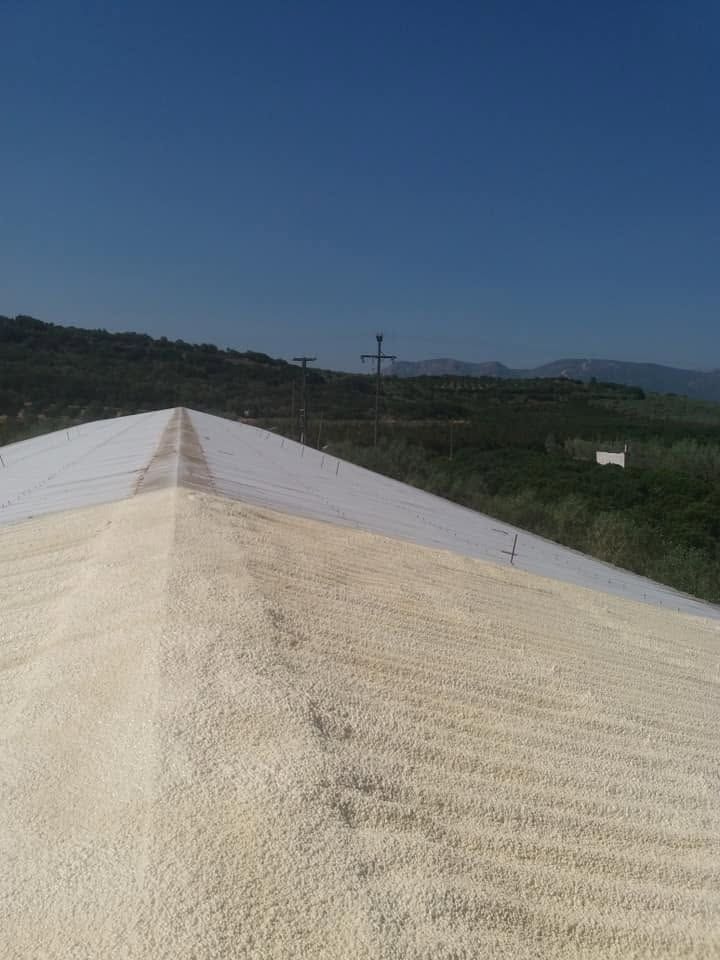
On this pitched roof you can see the difference clearly: in front, the part already sprayed; behind, the bare sheets waiting their turn.
When it needs some thought
Foam isn't the answer for every roof. Before deciding, it helps to know the following:
- It raises the floor. Door thresholds, drains and the height of the parapets need checking beforehand.
- It doesn't fix hollows. It follows the shape of the surface, so if water pools, the falls are corrected first.
- On a roof that gets regular foot traffic, the foam and its top coat need protecting from wear, for example with a screed on top.
- It needs a sound, clean, dry base. Anything that is loose or crumbling comes off first.
Which solution suits a particular roof is decided once someone has seen it up close.