Spray Polyurethane Foam: Flat Roofs, Metal Roofs and Pilotis Ceilings
Preparing the Surface
Part 2 of 4
The foam is only as good as the surface it sticks to. That's why, on a roof, much of the work happens before anyone picks up the spray gun.
Cleaning
Dust, dirt, lichen and soil stop the foam from bonding. On an old metal roof the sheets were black with dirt and were pressure washed. On a roof with old paving the whole surface was washed, joints between the slabs included, right up to the railings. After washing, the surface has to dry before spraying.
Whatever isn't holding comes off
An old membrane that has come unstuck is no base for anything. Spray foam on top of it and the foam will only hold as long as the membrane does.
On one roof the joints of the old membranes had opened and pieces had lifted, letting water in underneath. They were all stripped, and only then did the real state of the slab show. On another, with solar panels, the torn membrane was stripped even from under the panels.
Falls and a new screed
Foam follows the shape of the surface. It doesn't change the falls and it doesn't get rid of hollows: if water pooled before, it will pool afterwards.
On some roofs a new screed was pumped up first, spread and levelled, and the work carried on once it had dried. On one of them the solar panels stayed in place and the screed was spread around their bases, starting with the hardest spots under the panels.
Primer
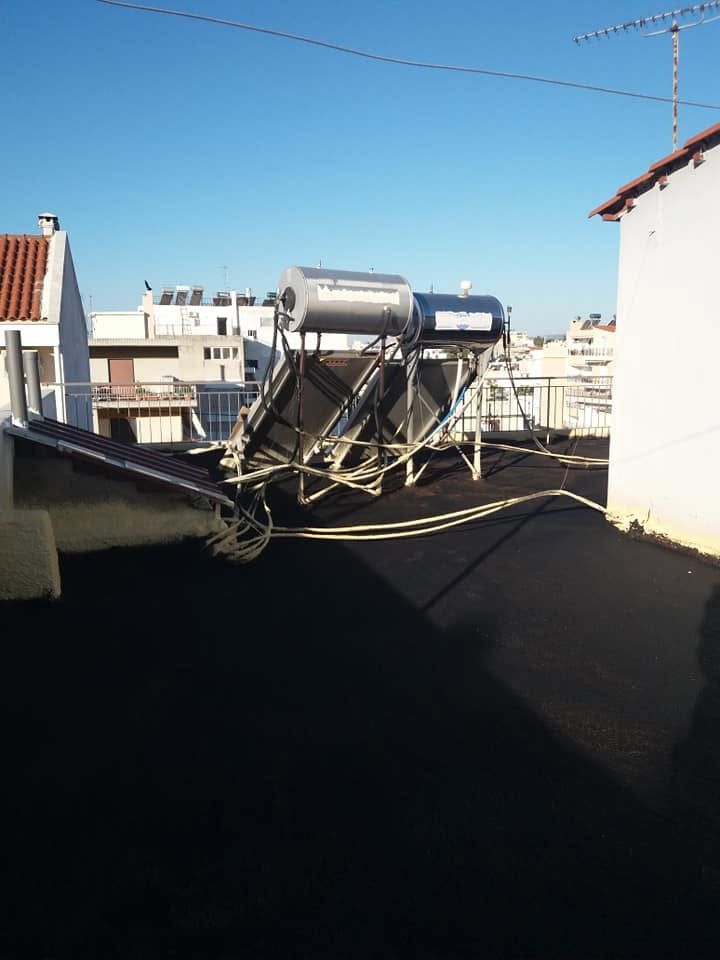
On many of the roofs a bitumen primer went on first. It binds the remaining dust and helps the foam stick firmly. To do its job it has to reach everywhere: under the solar water heaters, between the pipes, at the foot of the parapets and in the narrow passages around a rooftop room.
Covering what must stay clean
Spraying leaves a fine cloud of droplets in the air, and anything left uncovered gets marked. Before work starts, walls, windows, doors, awnings and air conditioning units are covered in plastic sheeting.
On ceilings the light fittings are wrapped or taken down, with their wiring protected. In one pilotis the walls, openings, air conditioning unit and floor were covered, and in one room everything was wrapped in plastic from ceiling to floor. If there are cars nearby, they are moved. In a block of flats it's a good idea to let the building manager and the neighbours know beforehand.