Quick answers
My metal roof leaks and gets scorching in summer. What can be done?
Water usually gets in at the screws, the joints between sheets and the corner with the wall. Spray polyurethane foam with a white coat closes those spots and insulates against the heat.
Roofs made of metal or corrugated sheets have a lot of joints and a lot of screws. Over time the holes around the screws widen, the joints work loose and water finds a way in. At the same time, a thin sheet in the sun gets very hot and passes that heat straight into the space below.
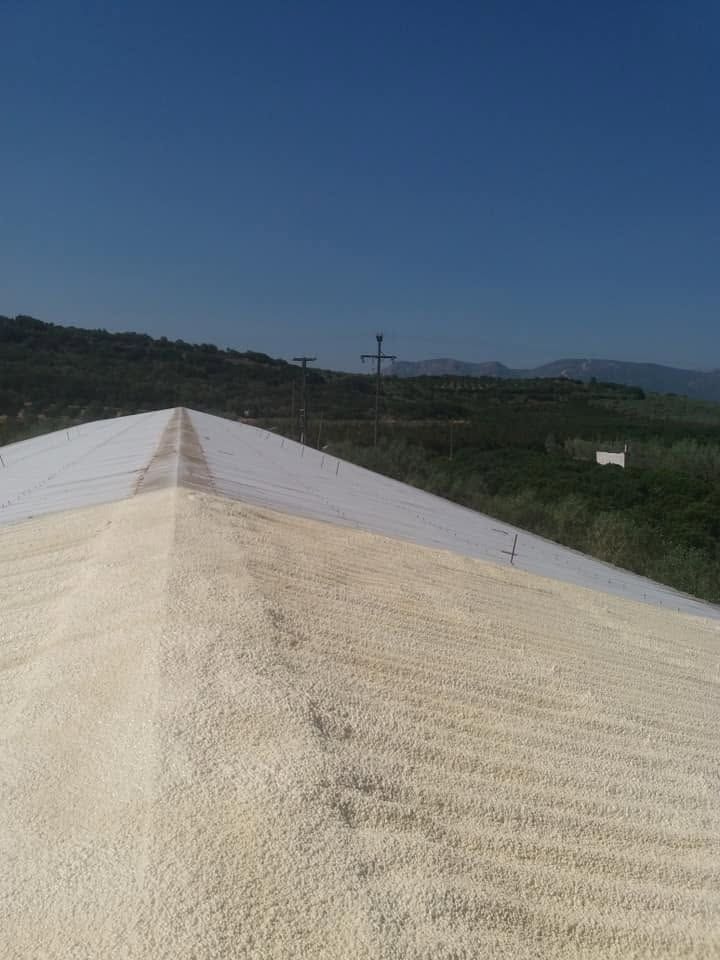
On this roof the foam was sprayed strip by strip, following the waves of the sheets and covering the joints and screws in one continuous layer, with extra care at the ridge. On another, the sheets were washed before spraying, because foam only bonds to a clean surface, and a white protective coat went over the foam, since it can't stand up to the sun on its own.
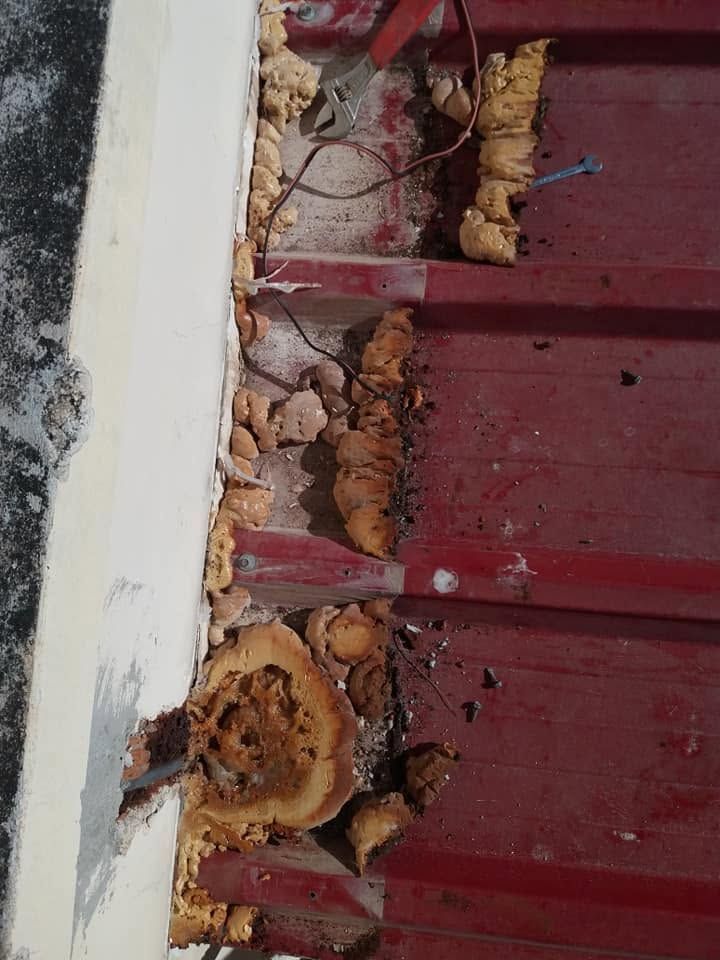
It isn't always the whole roof that needs doing. On a red metal roof the problem was the joint with the parapet: the old foam that filled it had crumbled in the sun and left gaps. The channel was cleaned out, refilled with new foam and protected with a waterproof coating, and the screw heads across the whole roof were sealed too.
Jobs that show it
Spray Polyurethane Foam on a Corrugated Roof and a Flat Roof
On the same building, the pitched corrugated roof and the flat roof were both sprayed with polyurethane foam. On the flat roof the foam was finished with a white coat that shields it from the sun.
See the job step by step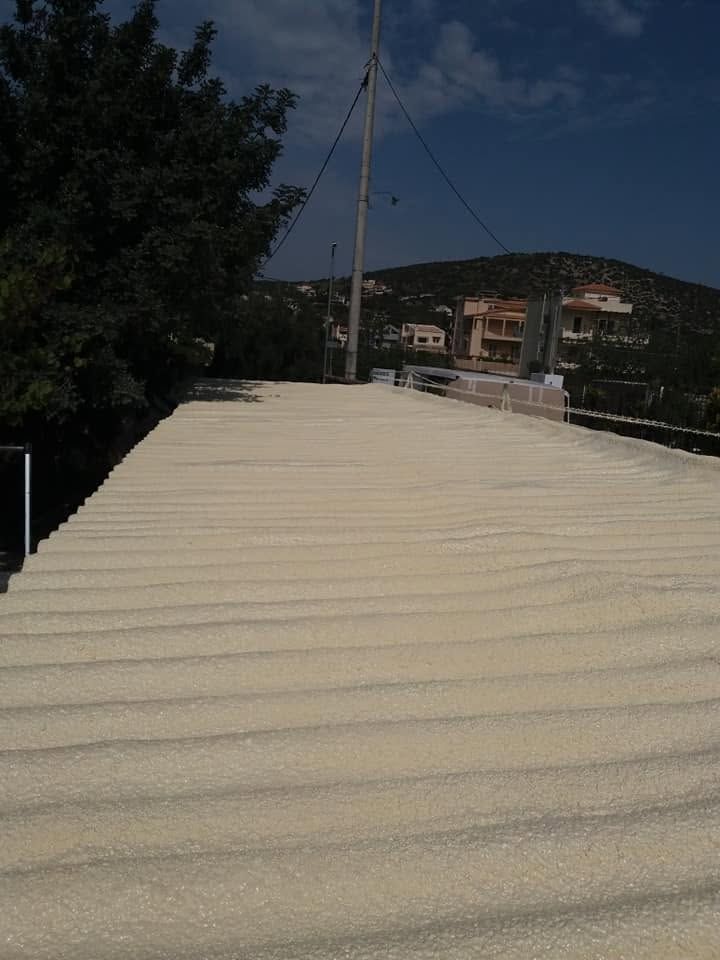
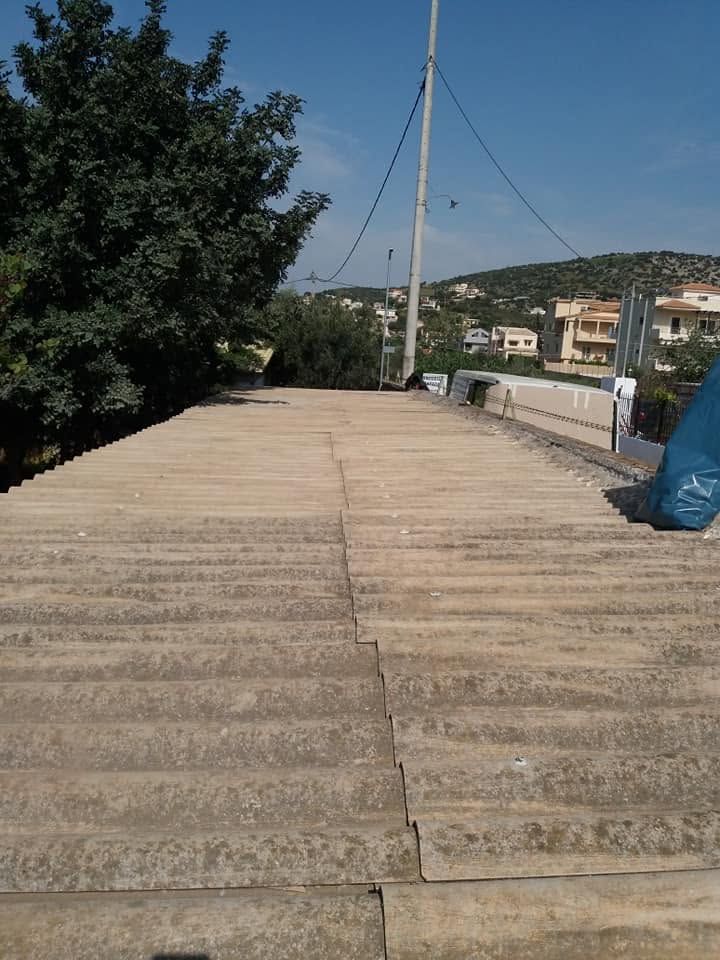
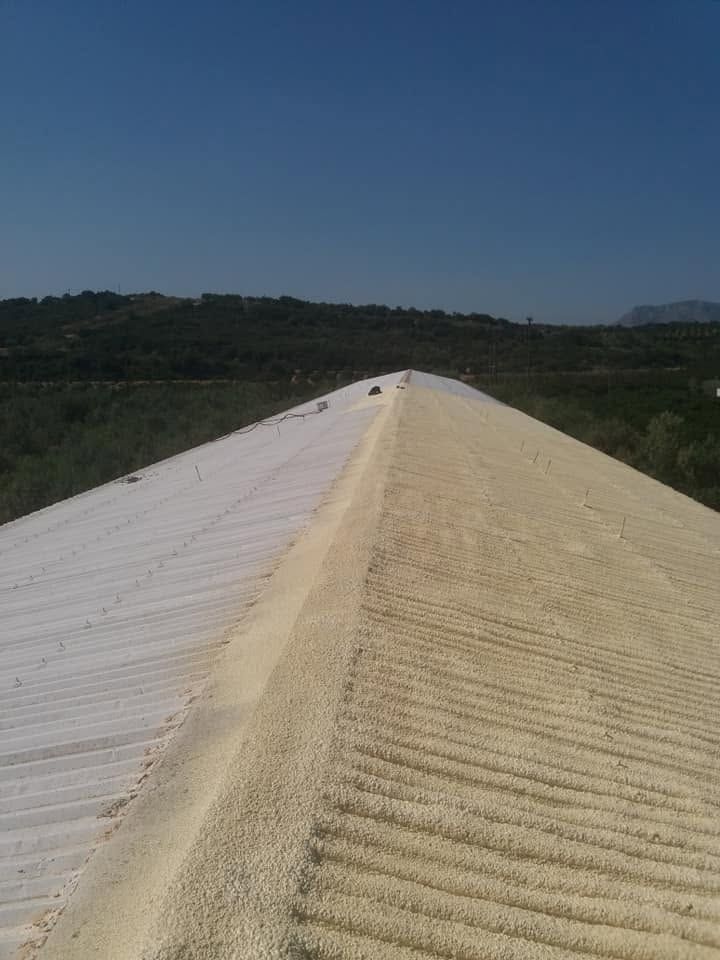
Spray Foam and a White Coat on a Corrugated Roof
The old roof was washed, sprayed with polyurethane foam and painted white to stand up to the sun.
See the job step by step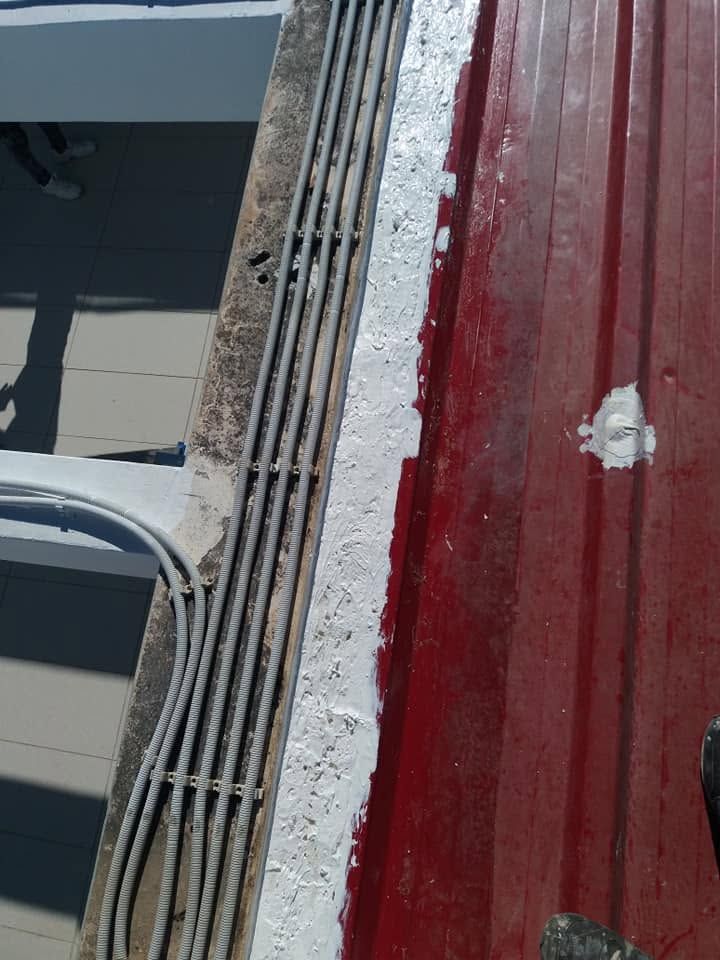
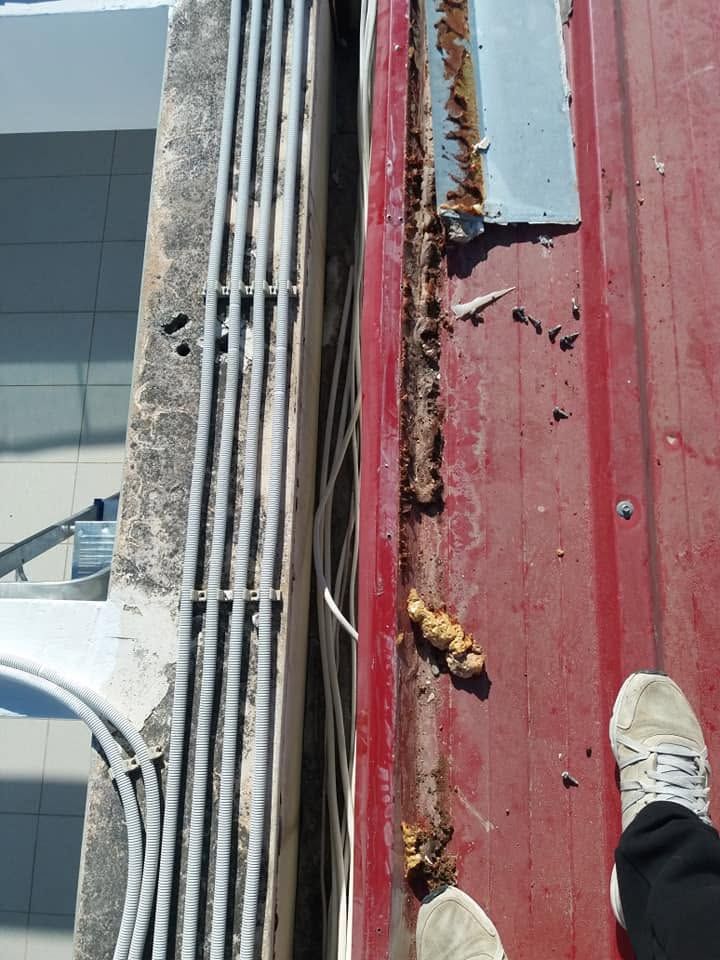
Sealing the Joints of a Metal Roof
On a red metal roof, the joint against the parapet was full of dirt and crumbling foam. It was cleaned out, refilled and sealed, and the screw heads were covered too.
See the job step by step