Quick answers
Part of my wall is damaged. Is it enough to patch and paint just that spot?
The patching is done on the spot, but it is better to paint the whole wall. New paint over a patch usually stands out from the old paint around it, however well the shade matches.
Small damage, like peeling paint next to a door or marks under a window, is repaired locally. The loose paint is scraped off, and the bare areas are filled and sanded so they are flush with the rest of the wall.
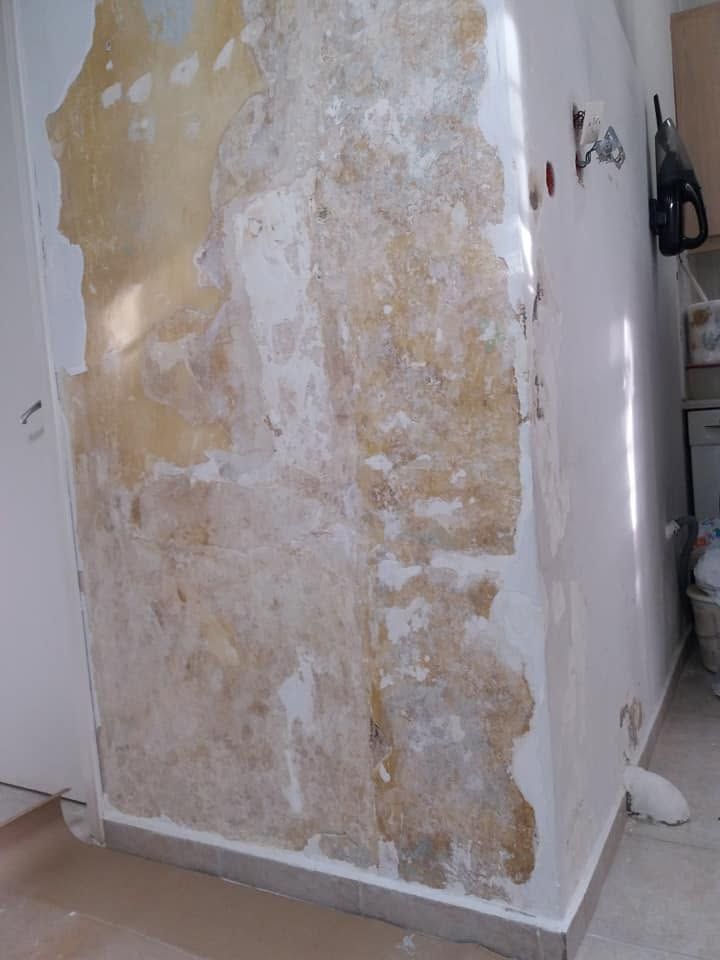
On this wall next to a door, the paint had lifted in large patches and the old plaster was showing. It was scraped, the bare areas were filled, and then the wall was painted again, evenly from edge to edge.
The painting is best done over the whole wall, from corner to corner. The old paint has changed with time and light, and filler takes up paint differently from the rest of the surface. That's why a patch painted on its own looks like a blotch. In a room with stains between the windows, the spots were repaired and then the whole wall was painted, so no patches show.
Keep in mind: if the damage is caused by damp, it will come back in the same place however carefully it is patched. If the peeling keeps returning, look for the cause first.
Jobs that show it
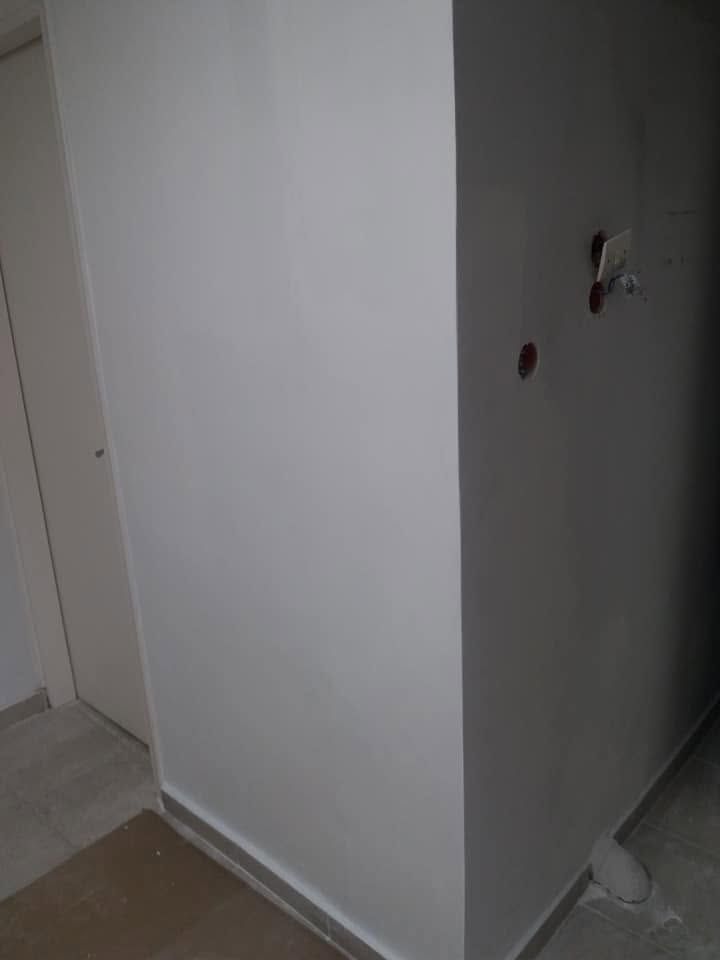
Repairing a Peeling Wall by a Door
Paint that had lifted in large patches was scraped off, and the wall was filled and painted again.
See the job step by step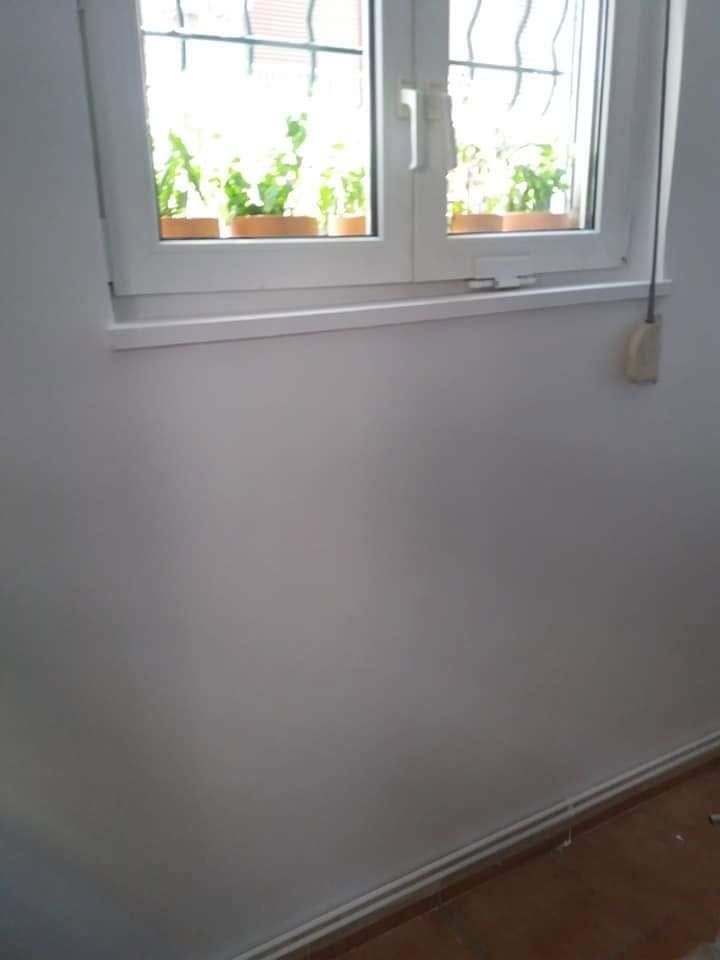
Repairing and Repainting a Stained Room
Stains and damaged spots under the windows were repaired and the room was repainted in one even, light colour.
See the job step by step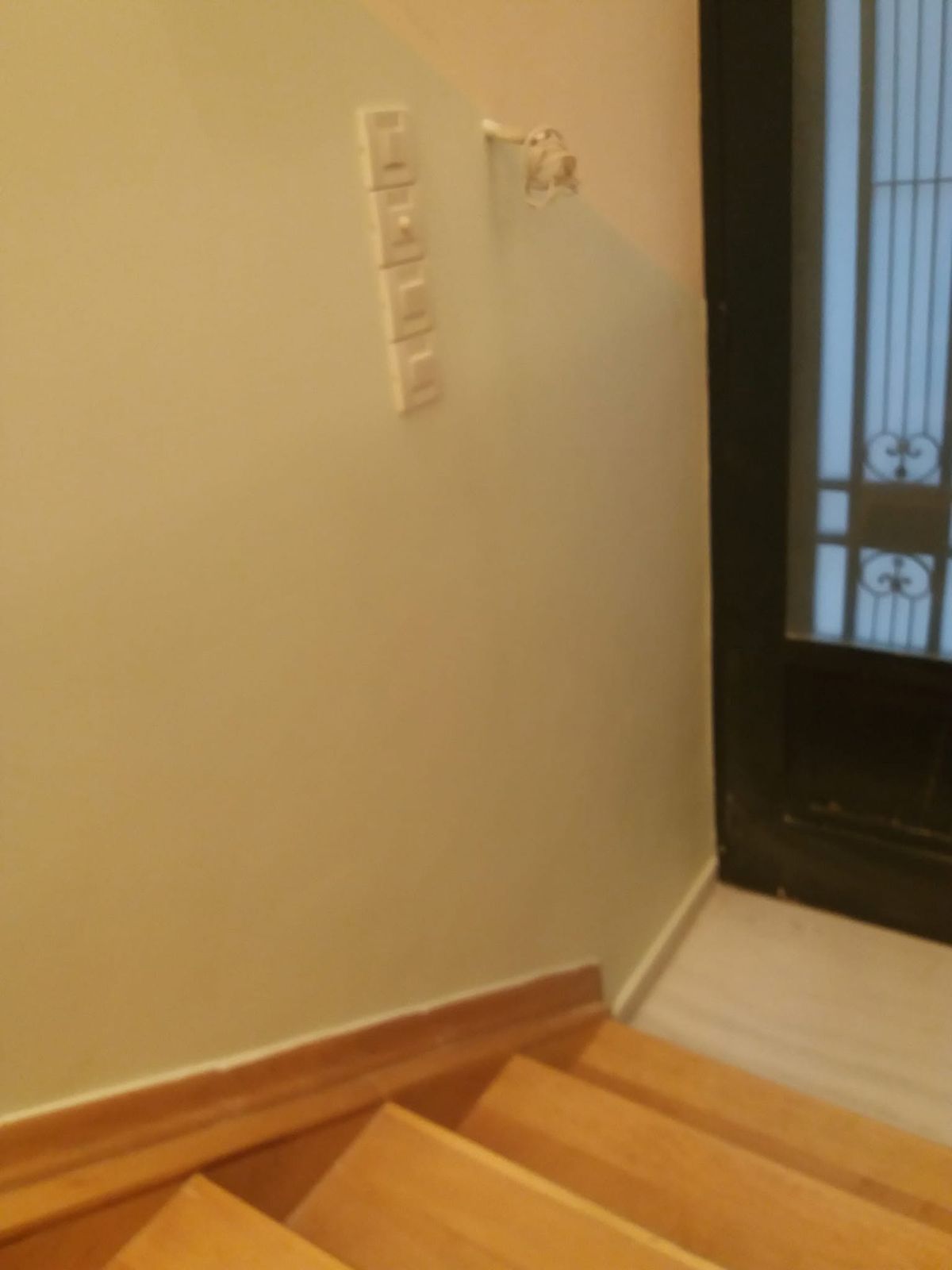
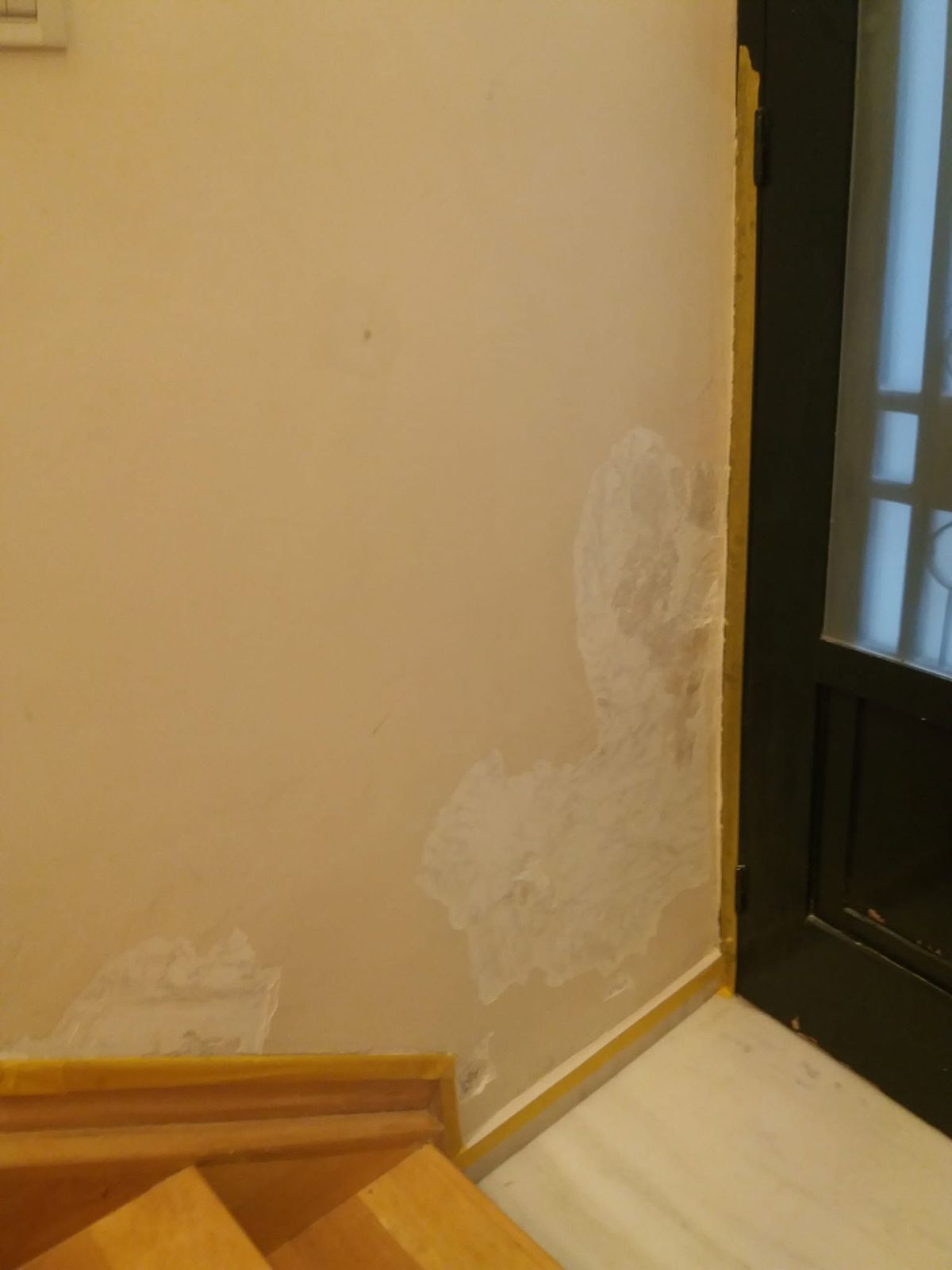
Entrance Hall with Damp Damage Repainted
The entrance hall walls were peeling in many places. They were repaired and painted a warm cream.
See the job step by step