Quick answers
I have a damp stain on my ceiling. Is painting over it enough?
Only if the cause has stopped. The stain points to water from above (a roof, a bathroom, a pipe) or condensation. Deal with that first, then scrape anything blistered, fill, prime and paint.
A stain on the ceiling is the sign, not the problem. It usually comes from water above: a roof or balcony that no longer keeps water out, a leaking bathroom on the floor above, or a pipe. If the stain grows after rain, the roof or the balcony is the first suspect.
It can also be condensation. When the moisture in the air of the home meets a cold ceiling it turns to water, and black spots of mould often appear there, mostly in corners, bathrooms and kitchens. Whatever the cause, mould is cleaned off before painting. In an old apartment, the ceiling around the water heater pipe had turned black with mould, and it was cleaned before painting, otherwise it would have come back through the new paint.
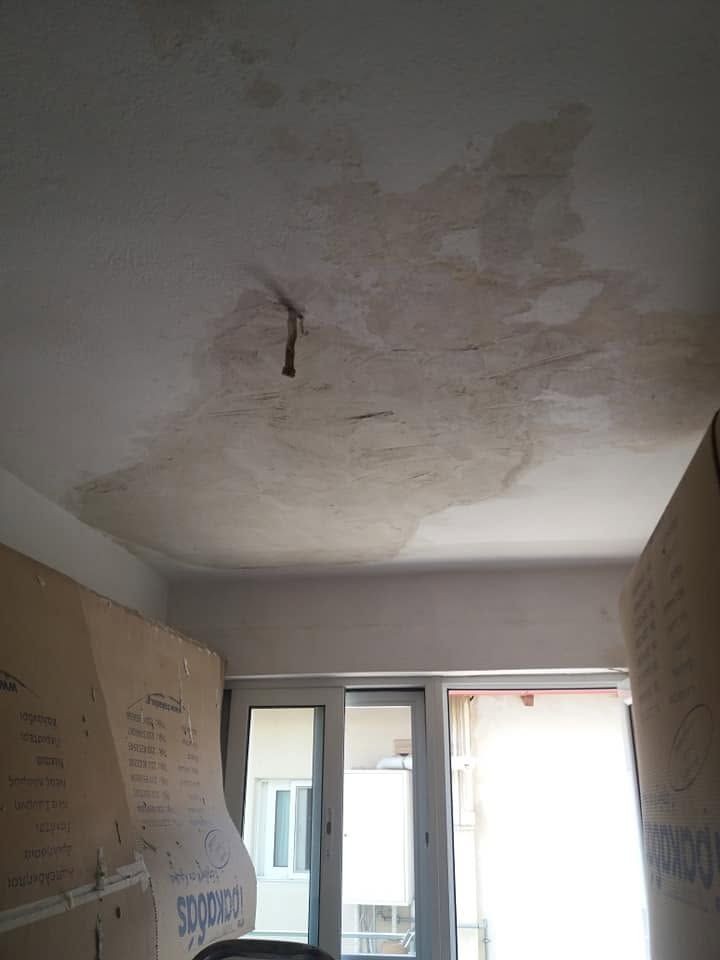
In another home, besides the stains, a hole had opened in the ceiling. The loose pieces were taken down, the hole was closed with new material and the ceiling around it was filled. The damp stains and blistered paint on the walls were scraped and filled too before painting.
Keep in mind: a water stain painted over without a suitable primer usually shows through the new paint again. And if the water keeps coming, no primer will hold it back. If the ceiling is sagging, sounds hollow or shows rusty steel, the repair is bigger than a coat of paint.
Jobs that show it
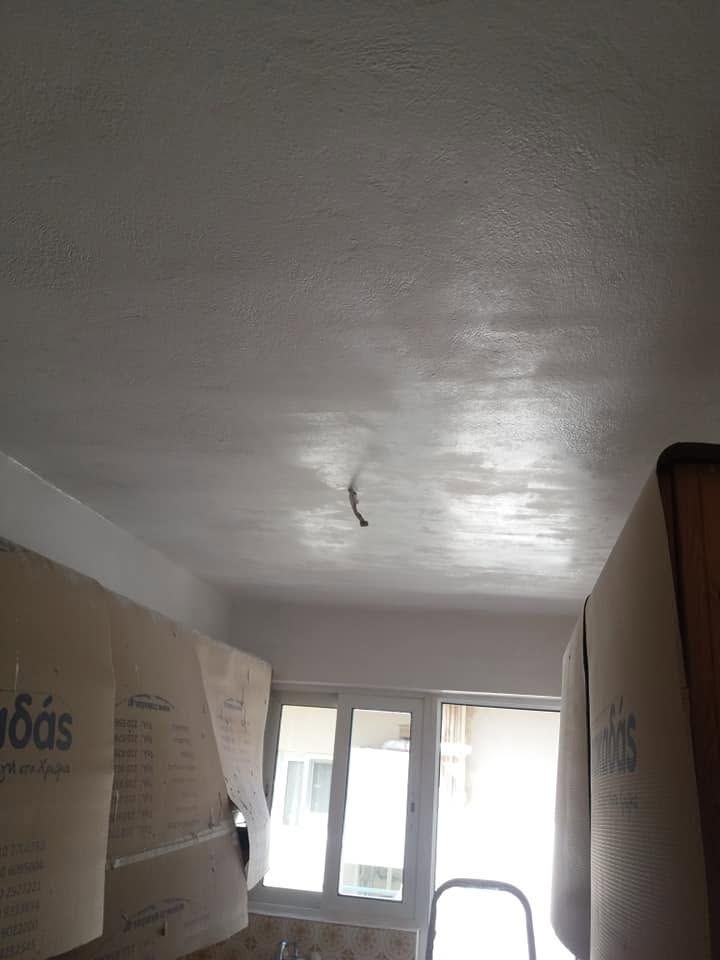
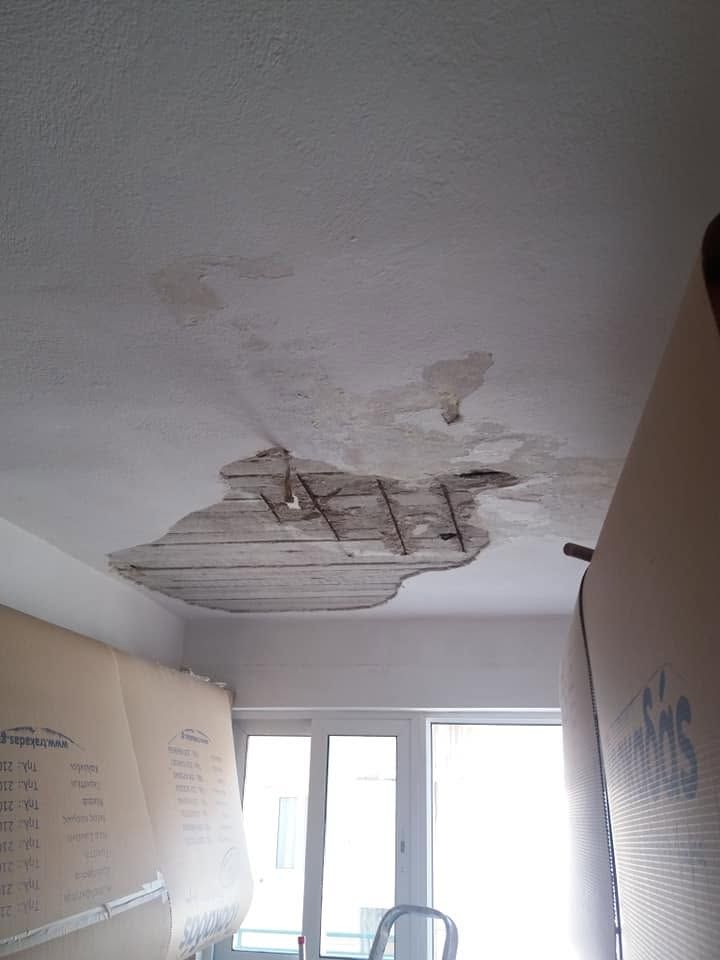
A Hole in the Ceiling and Damp Stains
A piece of ceiling had come down and there were damp stains under the windows. The ceiling was repaired and the walls were cleaned up and painted.
See the job step by step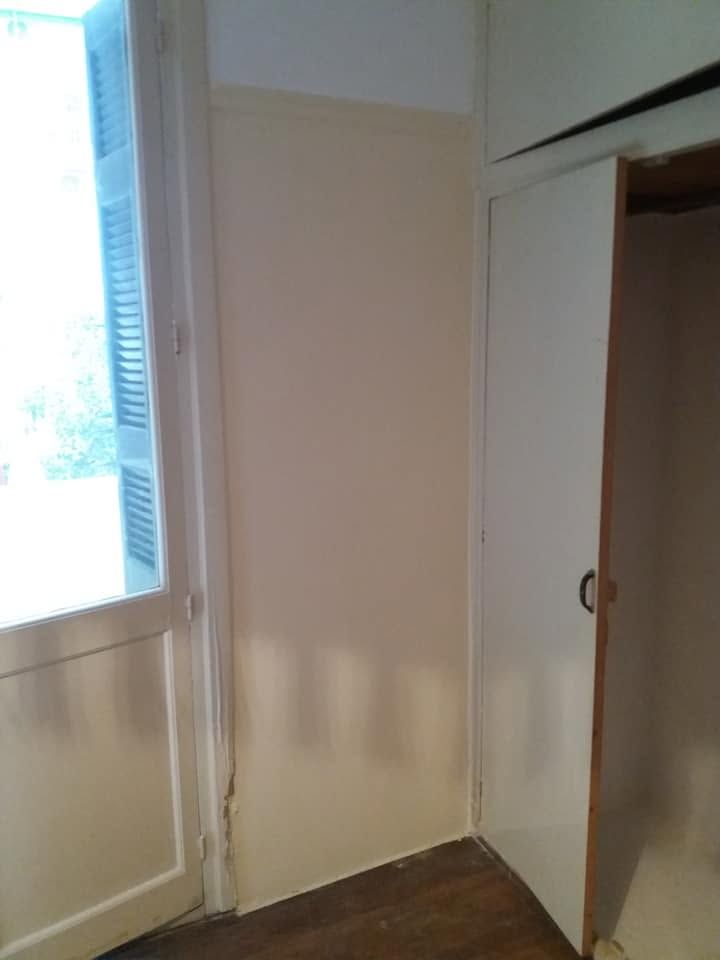
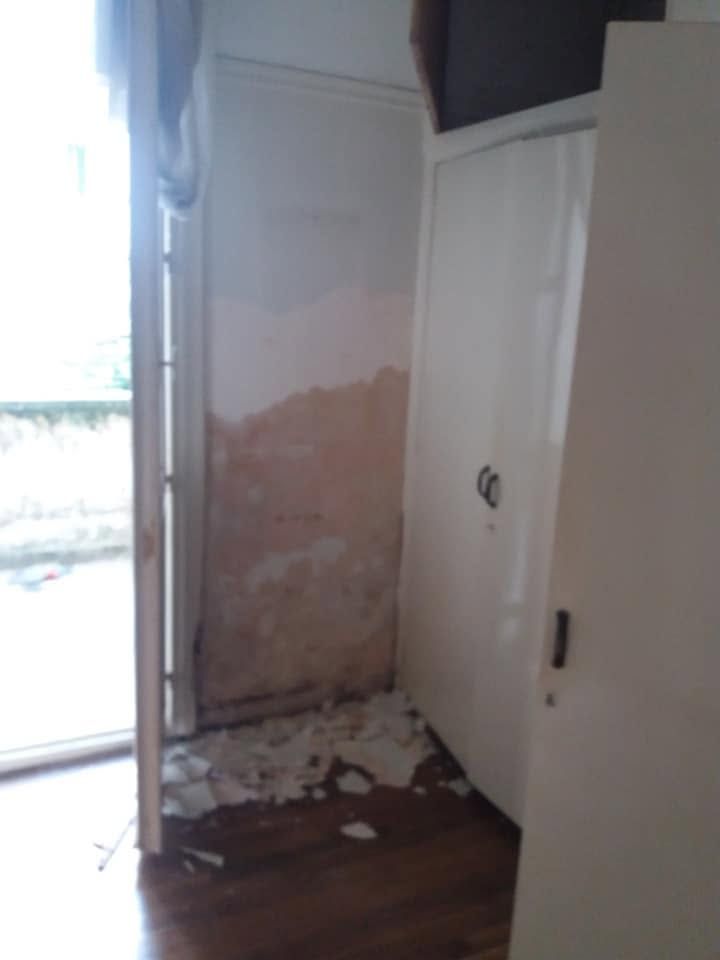
Old Apartment with Damp, Mould and Peeling Walls
Damp at the base of the walls, paint coming off in sheets and mould on the ceiling. Scraping, repairs and painting throughout, kitchen cupboards included.
See the job step by step