Quick answers
How can I tell my wooden pergola needs varnishing again?
When the wood fades or greys, feels rough, opens small cracks or soaks up water instead of shedding it. The parts that take the full sun and rain need varnishing more often than the rest.
Varnish protects wood from sun and rain, but it wears out too. The signs are that the wood's colour fades or turns grey, the surface feels rough, small cracks open, or rainwater no longer runs off but soaks into the wood. If the pergola is maintained at that stage, the wood itself hasn't had time to get damaged.
On a roof terrace with two wooden pergolas, the wooden frame and the closely spaced slats that cut the sun were maintained and given fresh varnish. The same was done to the lattice screens around the dining area and to the planters, which were varnished in the same dark tone so the whole terrace has one consistent look.
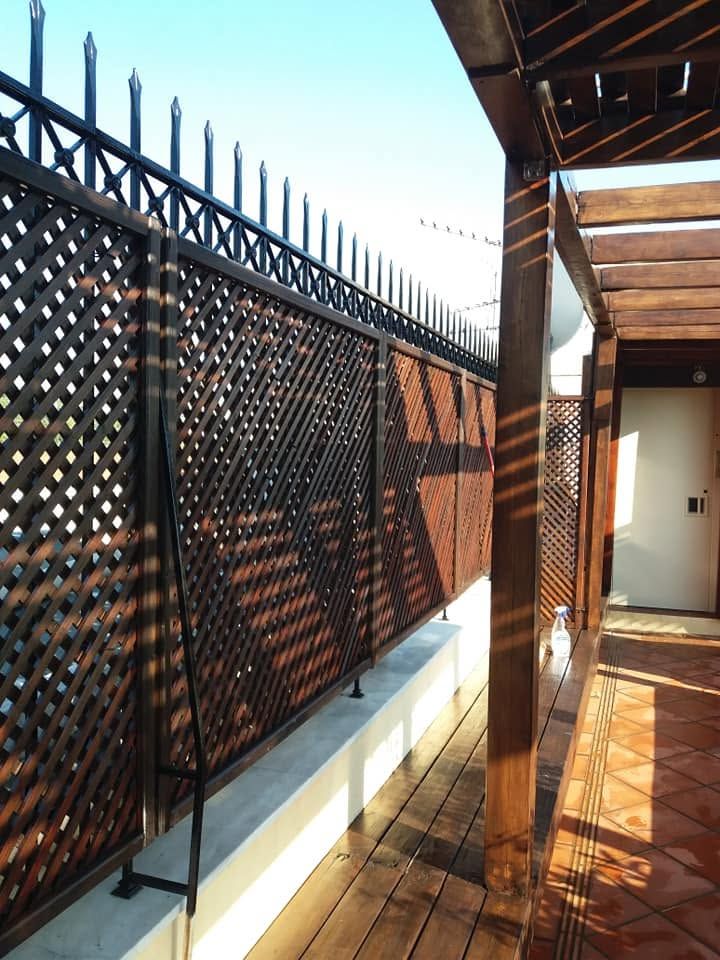
Not every part wears at the same rate. The tall lattice panels behind the railings, which screen the terrace from the neighbouring buildings, take the full weather and need varnishing more often than the parts that stay in the shade.
Keep in mind: in lattice the thin battens cross in a tight grid, and the varnish has to reach every one of them, because water sits right where they cross. And if a piece of wood has already gone soft or rotted, varnish won't save it. It needs repairing or replacing first.
Jobs that show it
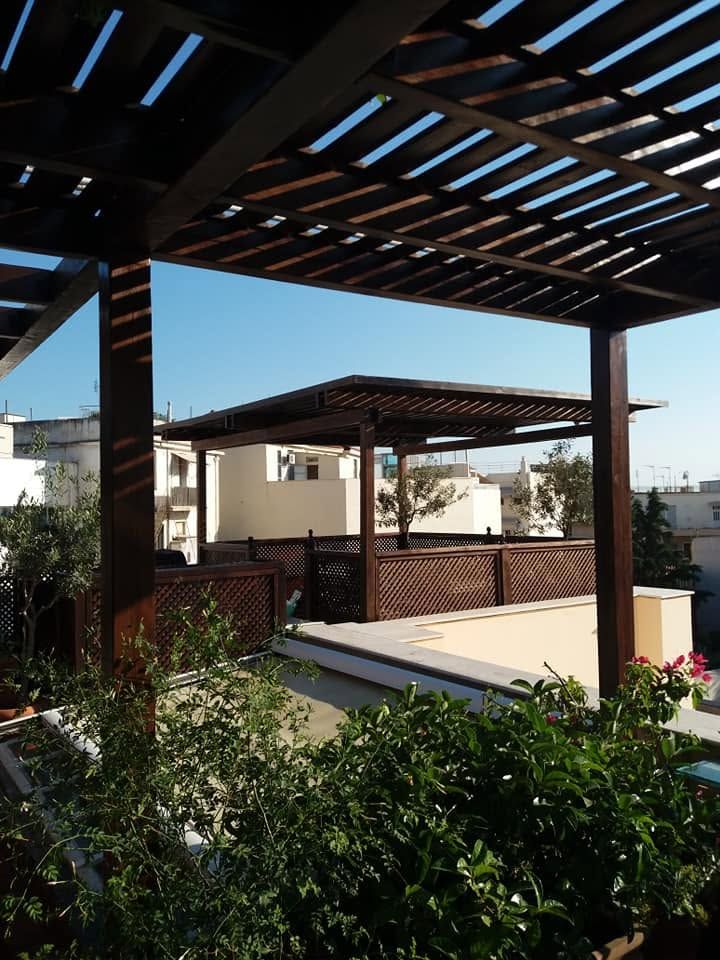
Varnishing and Maintaining a Wooden Pergola on a Roof Terrace
The wooden pergolas, lattice panels and clad planters on a roof terrace were maintained and varnished, so the wood stands up to sun and rain.
See the job step by step