Courtyards, Sidewalks and Balconies: A Guide to Outdoor Floors
What Goes Wrong with Outdoor Floors
Part 1 of 4
A courtyard, a sidewalk or a balcony has a much harder life than a floor inside the house. The sun heats it at midday and it cools down at night, rain soaks it and it dries out again and again, and people walk on it and drag tables and chairs across it. But most problems start with the same thing: water that doesn't drain away, or that finds a way down.
Where the damage starts
- The joints. The material between the slabs or tiles is the weakest point. Over the years it wears, crumbles and opens up. Water gets under the floor there, and weeds take root.
- The base. Under every floor there is a layer that holds it up: concrete, mortar or screed. When the base stays wet or gives way, the slabs lose their support, rock and break.
- The falls. An outdoor floor is never perfectly flat. It leans slightly so that water runs to a drain, a gutter or the street. Where the slope is missing or has been lost, water pools.
- Weeds and moss. Roots widen the cracks, and moss holds damp and makes the surface slippery.
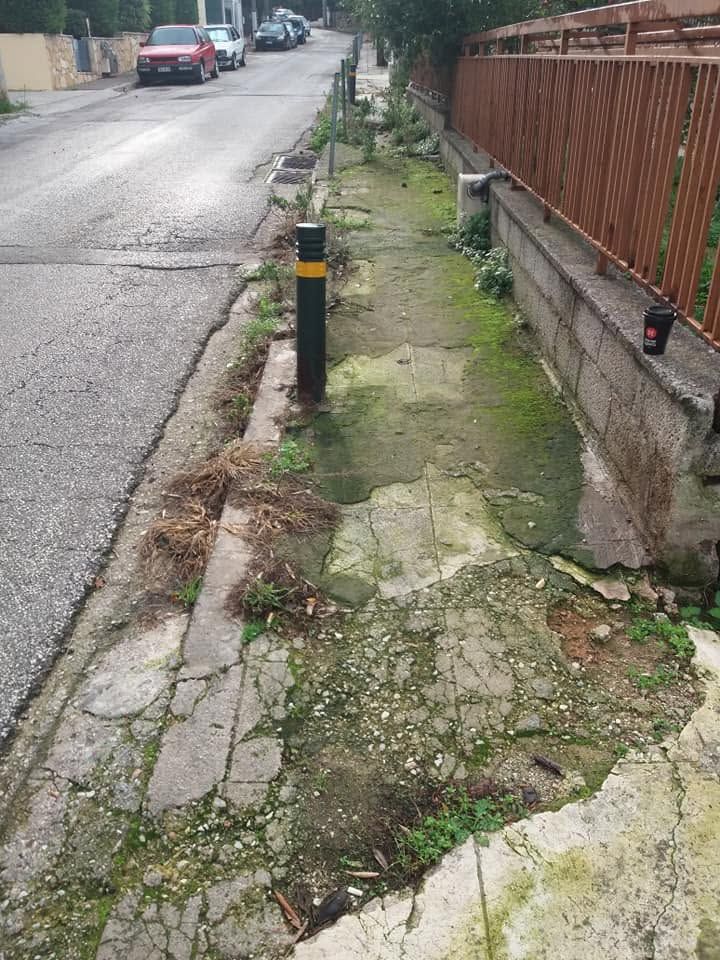
This sidewalk shows almost all of it at once. The surface had broken into pieces, moss had spread wherever damp lingered, and weeds were growing in the gaps. A spot like this is easy to trip or slip on.
Signs worth noticing
- Slabs or tiles that rock when you step on them, or sound hollow when you tap them lightly.
- Joints that have gone dark, emptied out or have weeds growing in them.
- Water that sits for hours after rain, or dark marks where water used to collect.
- Cracks that keep growing, and pieces that have sunk or lifted.
- Under a balcony, damp or blistered paint on the ceiling of the floor below.
One cause, many fixes
None of these signs means on its own that the floor has to be redone from scratch. What matters is finding where the problem starts: whether it's only the joints, whether the base has failed, or whether the water has nowhere to go. That can only be seen up close, on site, and it decides which fix makes sense.
The next chapters cover the most common cases: the stone courtyard with tired joints, the sidewalk that has broken along its whole length, and the balcony that holds water.