Courtyards, Sidewalks and Balconies: A Guide to Outdoor Floors
Stone Paving: New Joints or Relaying?
Part 2 of 4
Stone paving is one of the most durable floors for courtyards, sidewalks and steps. The stones last for years. What wears first is the joints between them, and often they are the only thing that needs work.
When new joints are enough
If the stones sit firmly, don't rock and haven't cracked, the floor usually doesn't need relaying. It's enough to clean out the old joints and fill them again. The new grout binds the stones together again, closes the way to water and weeds, and changes the look of the courtyard a great deal.
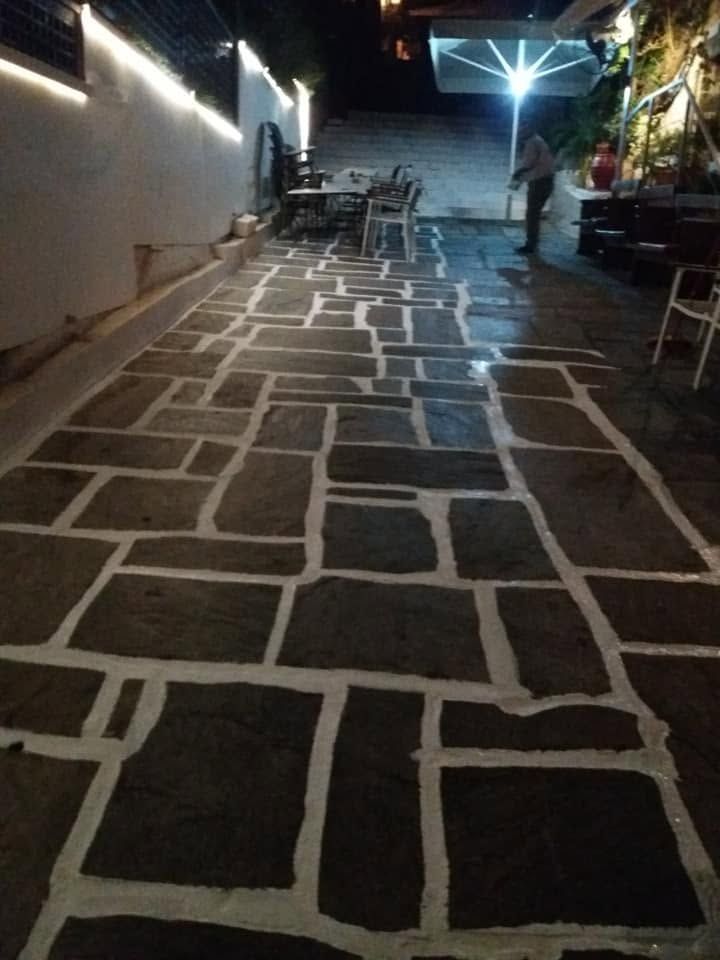
In one restaurant courtyard the old joints had darkened so much that they barely stood out from the stone, and the whole floor looked dark. The joints were filled again with white material, stone by stone, while the stones stayed where they were. The pattern of the paving showed again, day and night.
When relaying is needed
If some stones rock, sound hollow, have cracked or have sunk, new joints on their own aren't enough. A new joint around a stone that moves usually cracks again. Those stones need to come up, their bed needs cleaning, and they need relaying in fresh mortar, at the right height and with the slope water needs to run off.
If the problem covers the whole surface, for example because the base underneath has given way, a larger area may need redoing. That can only be judged by looking at the floor up close.
How the work is done
Broadly, renewing the joints involves these steps:
- Checking the stones, to find any that rock or have cracked and fix those first.
- Removing the old joint wherever it is crumbling, and cleaning out dust, soil and roots so the new material can bond.
- Filling the joints with the new material, stone by stone, and pressing it in well so no gaps are left.
- Cleaning the residue off the stone before it hardens, because afterwards it's hard to remove.
- Protecting the surface from foot traffic and rain while the material sets.
The colour of the joint
The joint isn't only a technical matter. A light joint makes the pattern of the stone stand out, as in the restaurant courtyard. A dark joint shows dirt less and blends more quietly with the stone. It's worth deciding before the work starts, because it isn't easy to change afterwards.
What to ask
- Which stones rock or sound hollow, and what will be done about them?
- Will the old grout be removed, or will new material go on top of it?
- What material will go in the joints, and what colour will it be once dry?
- When can the courtyard be used again?