Cracks, Loose Plaster and Rusty Steel: A Guide to Small Repairs
Reading the Damage
Part 1 of 5
Most small repairs in a home start with something you notice: a crack in the ceiling, paint bubbling next to a window, a piece of plaster on the floor. What you see is usually the result, not the cause. Whether the repair lasts depends on reading it correctly.
What the common signs usually mean
- Fine cracks in the paint or plaster. Often the plaster shrank as it dried, or the building moved slightly. Most of the time they stay on the surface.
- A crack in a straight line on a ceiling, with brown marks. This can mean the steel bars inside the slab have started to rust. Rust swells and splits the concrete open along the bar.
- Diagonal cracks running from the corners of doors and windows, or cracks that keep growing. These may have a structural cause.
- Stains, blisters, paint lifting. Water is getting in somewhere: from above, from a pipe, from the ground or from moisture in the air.
- Plaster that sounds hollow when you tap it lightly. It has come away from the wall or ceiling behind it, even if it still looks in place.
- Pieces that have already fallen. The material around them may be loose too.
What the jobs show
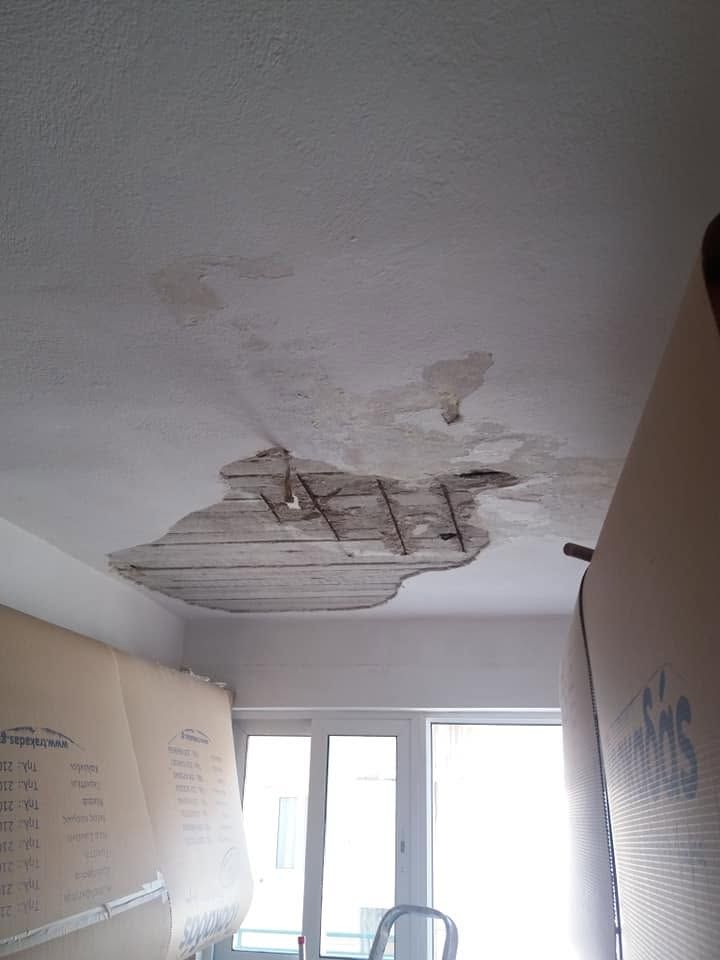
In one bedroom, the ceiling had cracks and patches where the plaster had blistered. One of the cracks ran in a straight line, and when it was opened up there was rusty steel inside. In another home a whole piece of the ceiling had come down, and there were damp stains on the wall between the windows. Both looked like "a bit of damaged plaster", but each needed a different repair.
When an engineer should look first
A tradesman can repair the surface. But some signs mean a structural engineer should see it first:
- rusty steel over a large area, or on a beam, column or balcony
- cracks that keep opening
- a ceiling that has started to sag
- doors and windows that began to stick around the time the cracks appeared
If pieces are falling, keep people and furniture away from the area underneath until someone has looked at it.
Before the repair, ask
- What do you think caused it, and has the cause stopped?
- Will everything loose be removed back to a sound base, or covered over?
- Will the whole surface be painted, or only the patch?