Wooden Shutters, Doors and Pergolas: A Restoration Guide
Why Outdoor Wood Wears Out
Part 1 of 4
Wood outside the house works hard. Shutters, front doors and pergolas take the sun all summer and the rain all winter, and wood reacts to both. Once you understand what wears it down, you understand what it needs to last.
The sun
The sun attacks the finish first. Varnish fades and thins, while paint loses its sheen, hardens and opens fine cracks. Once the wood is left bare, its surface changes: it starts greying, the fibres loosen and the wood feels rough to the touch.
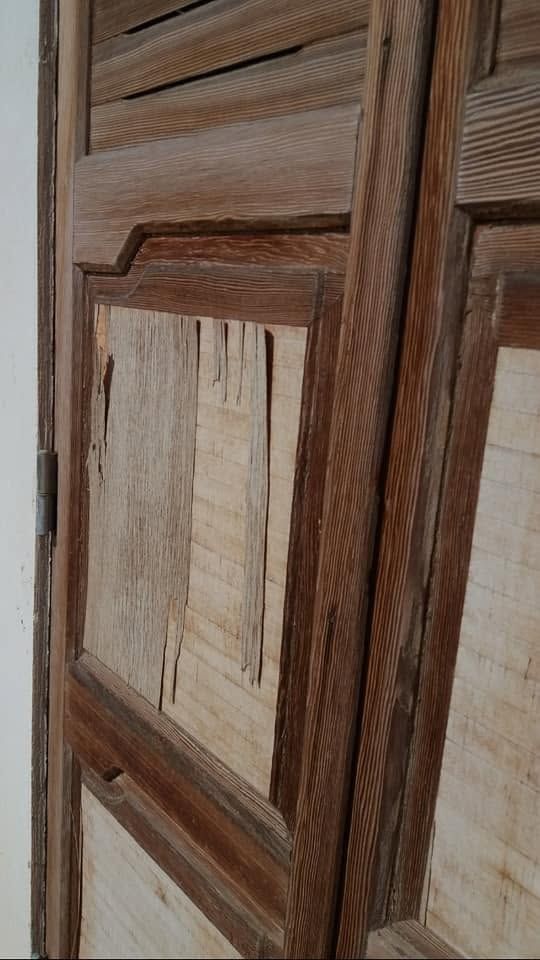
On one pair of shutters, the sun had stripped the colour from the wood completely. It had turned grey and split along the grain across the panels.
Water
Wood soaks up water and swells, then shrinks again as it dries. That movement, over and over, breaks the paint, and more water gets in through the cracks. Water stays where it can't run off: at the bottom of each leaf, in the joints, where thin battens cross, and where wood rests on marble or a floor. There, over time, the wood can rot.
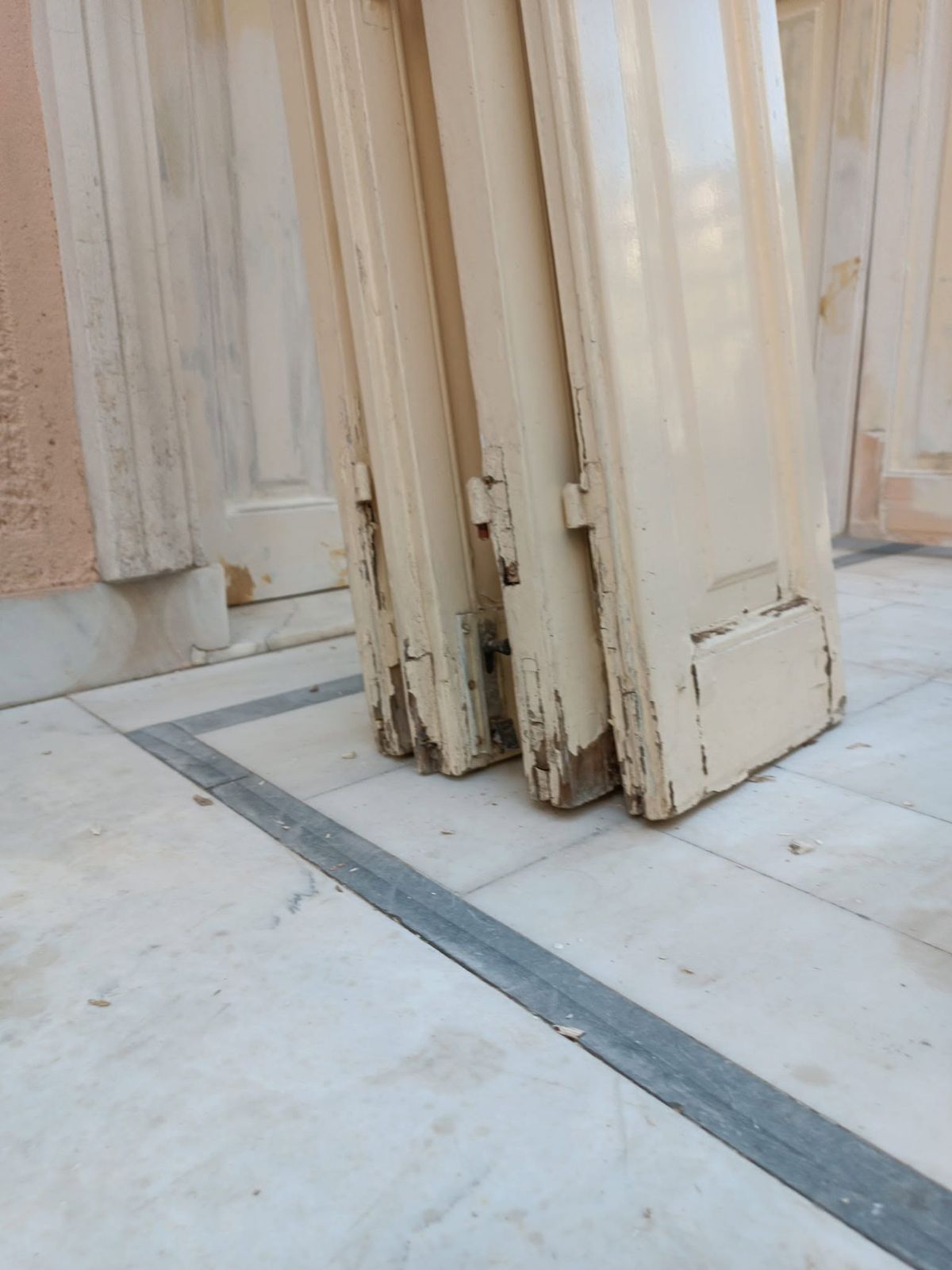
On one set of old shutters the paint had peeled everywhere, but the worst damage was at the bottom ends of the leaves.
What to look for
- Paint that peels or blisters, with bare wood underneath.
- Wood that has gone grey or feels rough.
- Cracks running along the grain.
- Joints that have opened up, or leaves that no longer close properly.
- Soft spots. Press a screwdriver into the bottom ends and the joints. If the wood gives or crumbles, it has rotted.
Most of these are surface wear and can be put right with sanding and a new finish. Rotten wood, though, can't be saved with a coat of paint: that piece needs repairing or replacing. How far the damage goes only shows when someone looks at it up close, and often only fully once the old paint is off.