Spray Polyurethane Foam: Flat Roofs, Metal Roofs and Pilotis Ceilings
Spraying and the Awkward Spots
Part 3 of 4
Spraying is the quickest part of the job. Its quality, though, is decided where the roof isn't flat: at the corners, the bases and the edges.
How the spraying goes
The machine feeds the gun with the two materials, which turn into foam as soon as they meet. The sprayer wears a full protective suit and a mask and works strip by strip or section by section. While spraying goes on, anyone not working is best kept away, with the windows nearby closed.
The foam expands within moments. The surface it leaves is slightly uneven, with a grainy texture, not smooth like plaster. That is normal.
Corners and parapets
The corner between the floor and the parapet is one of the weakest spots on a roof. The foam doesn't stop there: it carries on up the parapet, and on some roofs over its top as well. Floor and wall become one continuous layer, with no open joint in the corner.
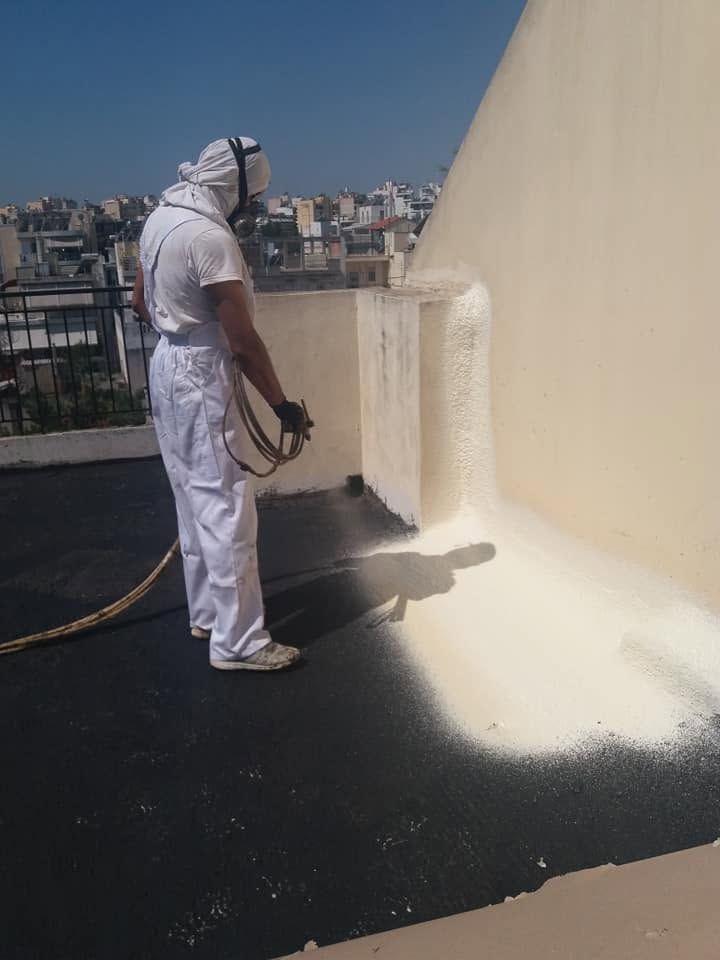
Bases, legs and pipes
Anything that passes through the roof or stands on it is a likely leak point: air conditioning bases, the legs of solar water heaters and tanks, vent pipes, chimneys, steel bars sticking out of the slab. The foam wraps them on every side, so they join the rest of the surface with no gap. These spots are hard to reach and take patience.
Edges, ridges and joins with other roofs
The foam also covers the edges of the slab, so the insulation doesn't stop short of the rim. On a pitched metal roof, the ridge, where the two slopes meet, was sprayed with extra care because it is the most exposed spot. And on a roof that meets the bottom edge of a tiled roof, the foam closed the corner between the two, because that is where water runs down off the tiles.
What stays clear
Some spots must not be covered. On ceilings, light points and spotlights are left clear and clean so the fittings can go back. On a roof, the drains must not be blocked or end up higher than the surface around them, or water will collect next to them. It's worth agreeing beforehand how this will be handled.
Thickness
How well the foam insulates depends mainly on its thickness, and the thickness needed varies from job to job. Ask how thick the layer will be and whether it will be the same across the whole surface, parapets and edges included.