Damp and Fire-Damaged Rooms: The Work Before the Paint
After a Fire
Part 4 of 5
After a fire, the order of work is the same as with damp: check, remove whatever isn't holding, repair, prime, paint. There are two differences, though. Soot needs its own cleaning, and before anything else there has to be a safety check.
In one room that had caught fire, soot covered the walls and ceiling, and the heat had loosened plaster and paint.
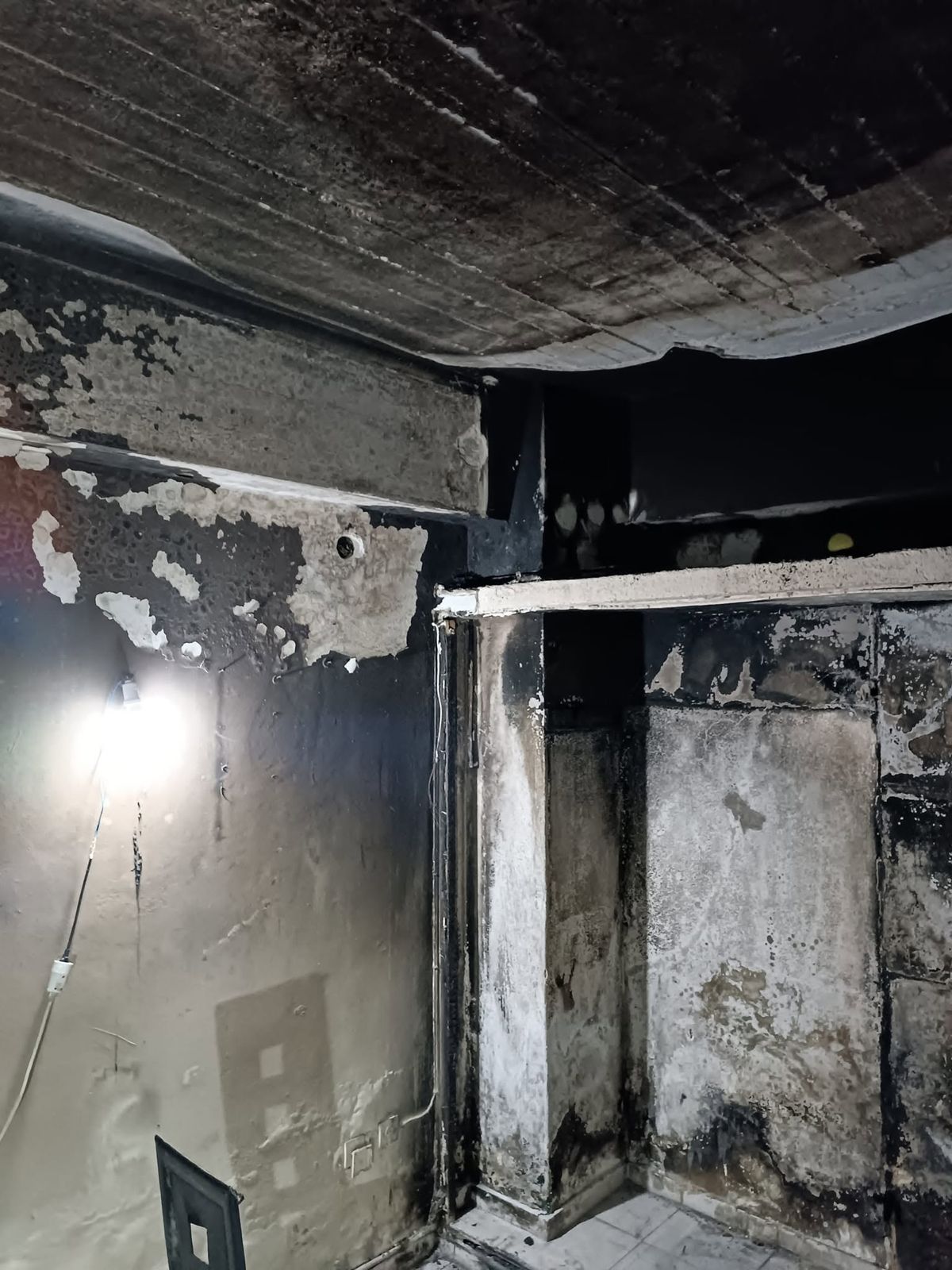
Safety first
Before any cleaning or repair, the electrical wiring near the fire should be checked by an electrician. Cables, sockets and switches may have damage you can't see, and it's better to replace them before the walls are closed up again.
If the fire was intense, or there are cracks or exposed steel in the concrete, it is wise to have an engineer look at the slab and beams before anything else starts.
What the heat loosened
As with damp, the first step is to check what is holding and what has to go. Plaster that has bubbled or sounds hollow and paint that has lifted are removed. Whatever stays must be sound, or the repair will sit on a weak base.
Cleaning the soot
Soot is a greasy dust. Paint doesn't bond to it, and its stains come through the new coats. That's why it is cleaned off section by section, on walls and ceiling, as carefully as possible.
How it is cleaned matters. Wiped hastily with a wet cloth, soot often smears and works deeper into the surface instead of coming off.
Stain-blocking primer
After the plaster repairs, a stain-blocking primer goes on so the final paint stays clean. In this room, two coats of paint followed on the walls and ceiling, and the room was bright again.
The smell
The smell of smoke stays in porous surfaces. Careful cleaning and the primer help to seal it in, as does good ventilation during and after the work. Fabrics, curtains and furniture that smell of smoke are a separate matter and aren't solved by painting.