Damp and Fire-Damaged Rooms: The Work Before the Paint
Plaster, Filler and Primer
Part 3 of 5
Once everything that isn't holding has gone, the wall is built back up layer by layer: plaster where it's missing, filler for the small flaws, sanding, primer and, last of all, the paint.
New plaster where it has gone
Areas scraped back deeply are filled with new plaster until they are level with the rest of the wall. In one apartment, damp had ruined a whole strip of plaster in the corner beside the window, from the ceiling down. With new plaster and paint, the corner no longer stands out from the rest of the wall. In another apartment the section of ceiling that had fallen was plastered again.
New plaster has to dry well before it is painted. How long that takes depends on its thickness, the season and how well the room is ventilated.
Filler and sanding
Small dips, the edges of scraped areas and holes are filled. The white patches you see on walls before painting are exactly that. They are then sanded so they are flush with the rest of the wall and don't show under the paint.
Primer
Patches, new plaster and old paint don't take up paint the same way. Primer evens out the surface so the final paint spreads evenly. In an office, a first coat went onto the repaired areas and then across the whole wall under the window, down to the skirting.
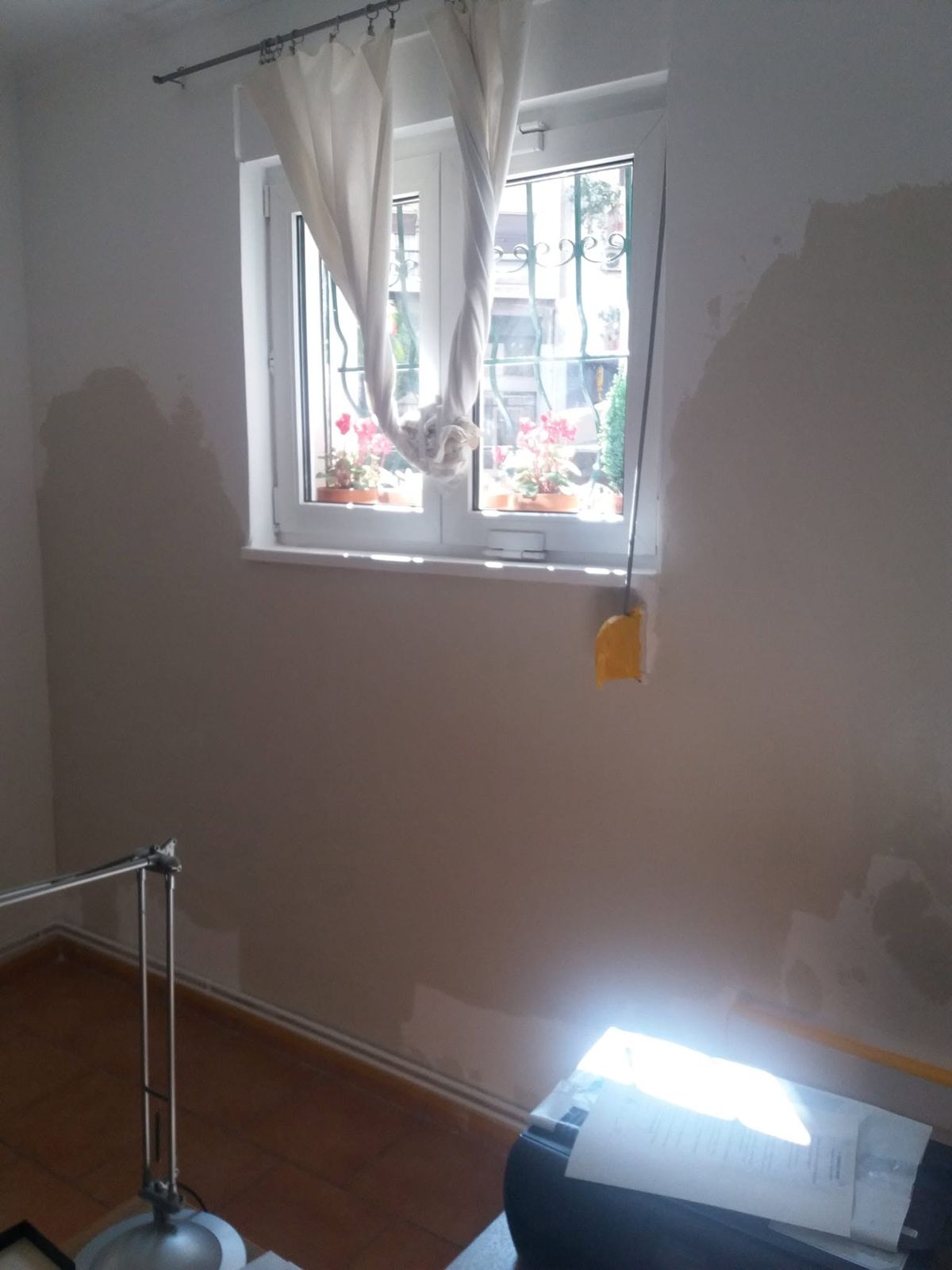
Where water or soot stains remain, a stain-blocking primer is needed. Otherwise they come back through the new paint, however many coats go on.
The whole wall, not just the patch
A patch painted on its own shows, because the old paint has changed shade over the years and filler takes up paint differently from the rest of the wall. That's why the new paint goes over whole walls, corner to corner. In an entrance with peeling patches next to the door and the stairs, the patches were repaired and then whole walls were painted, so there were no differences in shade.
Paint for damp-prone rooms
In kitchens, bathrooms and rooms with condensation, a washable paint helps. There are also paints with anti-mould additives. But no paint stops damp: if the cause remains, the damage will show again. In these rooms good ventilation matters more than the paint.