Damp and Fire-Damaged Rooms: The Work Before the Paint
Scraping Back to a Sound Base
Part 2 of 5
Every coat of paint holds on to whatever is beneath it. Paint over something that isn't holding and the new paint will come away with it. That's why, in a room damaged by damp, the most important step is the scraping, and it's the one you don't see at the end.
How deep
Scraping stops where the surface is sound, and that changes from spot to spot, even on the same wall.
- Just the paint. When the paint has lost its grip but the plaster underneath is sound, only the layers of paint that aren't holding are scraped off.
- The paint and the top layer of plaster. In an office where damp had got in, the paint and the surface of the plaster had come away in large patches.
- Down to the masonry. When the plaster has gone bad deeper down, the scraping goes all the way to the brick. In one apartment, the wall behind the counter was stripped back to the masonry so the new plaster would sit on a sound base.
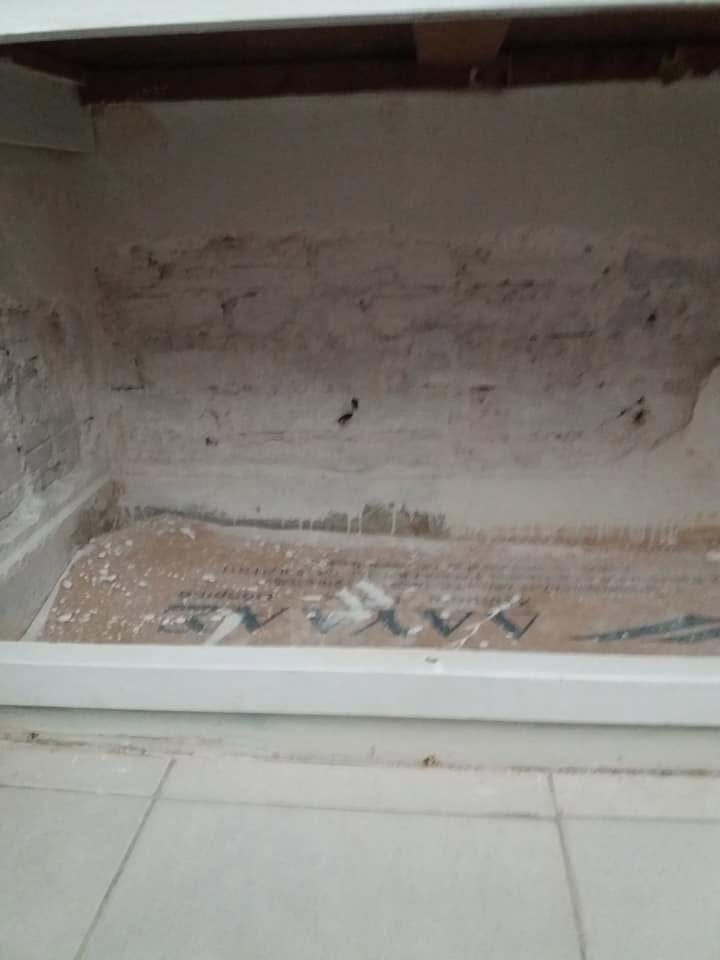
Finding what isn't holding
Anything that has bubbled, anything that lifts easily with a scraper and anything that sounds hollow when you tap it lightly comes off. Plaster that crumbles in your hand or turns to dust is no base for anything.
The damage often turns out to be bigger than it looked, because the damp has spread behind paint that seemed sound. That only shows once the scraping starts.
By hand, piece by piece
In an old apartment every loose piece was scraped off by hand, from a ladder, even high up the walls. Leave even a little loose paint and the new paint will peel off with it. It's slow work, but it decides the result.
Mould
Mould isn't painted over. It is cleaned off first, or it comes back through the new paint. In an old apartment the ceiling around the water heater pipe had turned black with mould, and it was cleaned before painting. While cleaning, the room is well ventilated and whoever is working protects their hands, eyes and breathing.
Dust and protection
Scraping makes dust and drops flakes and bits of plaster on the floor. Furniture that stays in the room is covered with plastic sheeting and the floor is protected. Halfway through, the room looks worse than before. That's normal.