Quick answers
I want new colours at home. Where do I start?
A few colours repeated from room to room, one wall in a stronger shade if you want character, and a darker colour where walls get dirty easily. A strong old colour needs extra coats to cover.
The best start is to choose a few colours and repeat them through the home, so the rooms belong together. In one older house, the same few colours repeat from room to room, and the grey doors tie in with the band along the bottom of the walls.
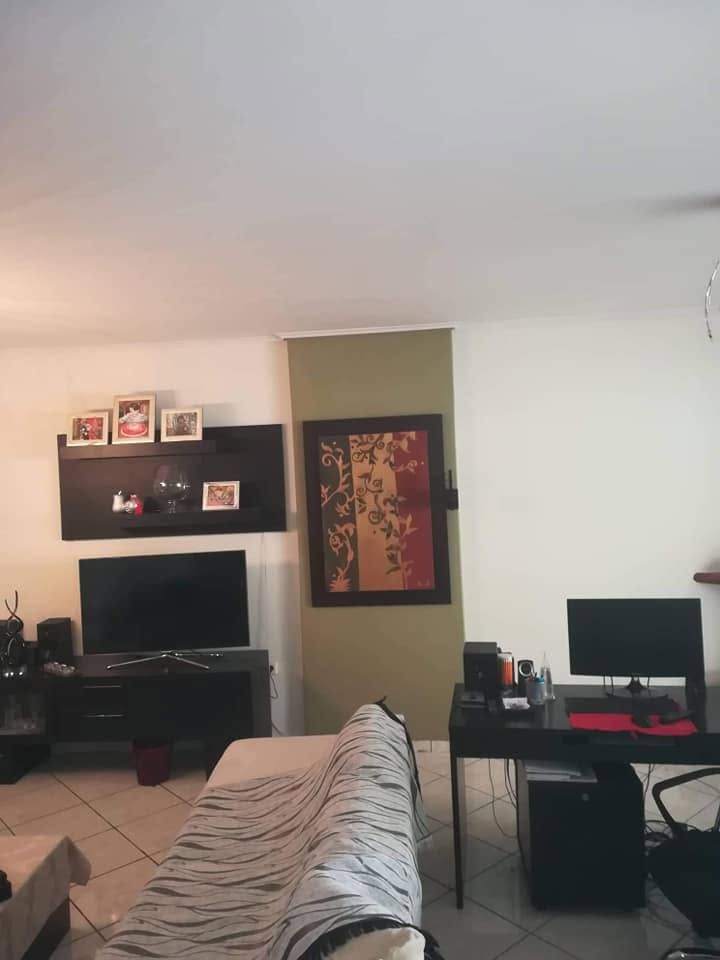
If you want character without making a room feel heavy, one wall in a different colour is enough. In a living room with white walls, a column in olive green next to the TV and the same shade above the fireplace gave the room a centre.
A practical trick is to put the darker colour on the lower part of the wall, where it gets dirty more easily. In the kitchen of the older house the wall was split into two tones with the darker one below, and in an office a dark blue band low down hides the marks of everyday use.
If you are going from a strong colour to a light one, allow for extra coats. In a bedroom painted a strong mint, the green still showed after the first white coat, and it took care to stop the old colour coming through.
Keep in mind: colours change with the light in each room. A sample on a large piece of wall, seen by day and in the evening, tells you more than a colour card.
Jobs that show it
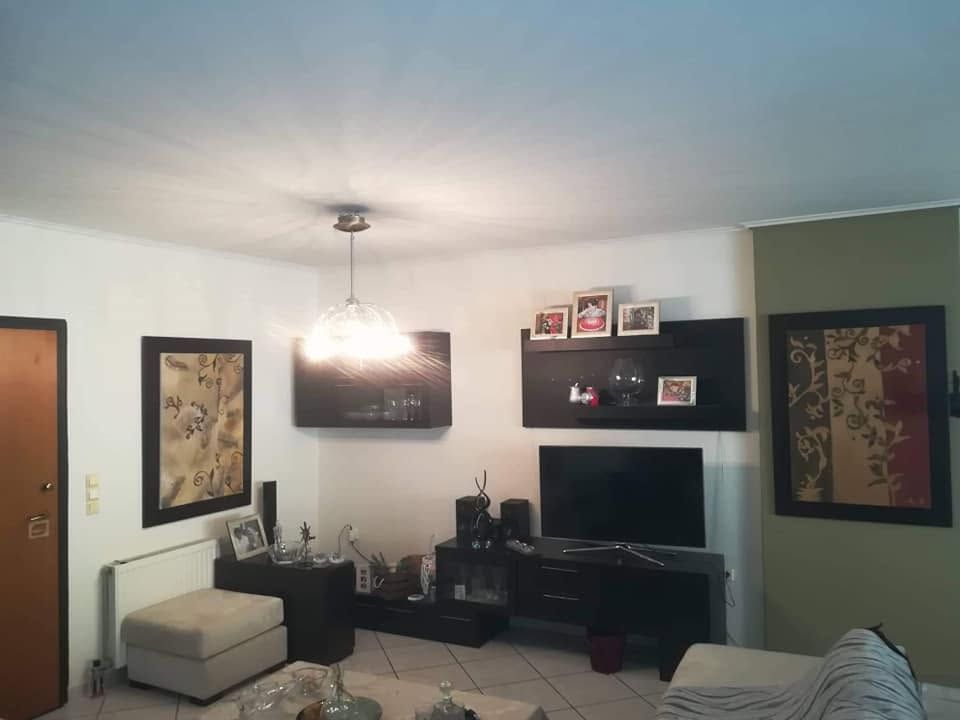
Apartment Painted in Warm Tones with an Olive Wall
A bedroom in warm peach and a white living room with olive green around the fireplace.
See the job step by step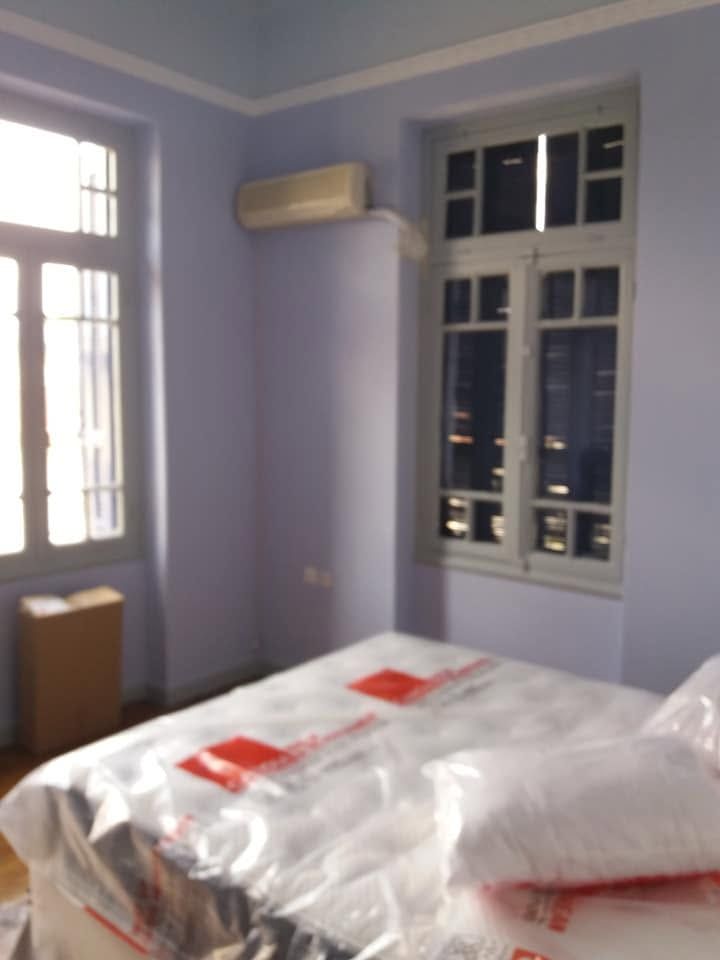
Repainting an Older Home in Soft Colours
High ceilings, wooden window frames and glazed double doors. The walls got soft colours, with a grey-blue band along the bottom.
See the job step by step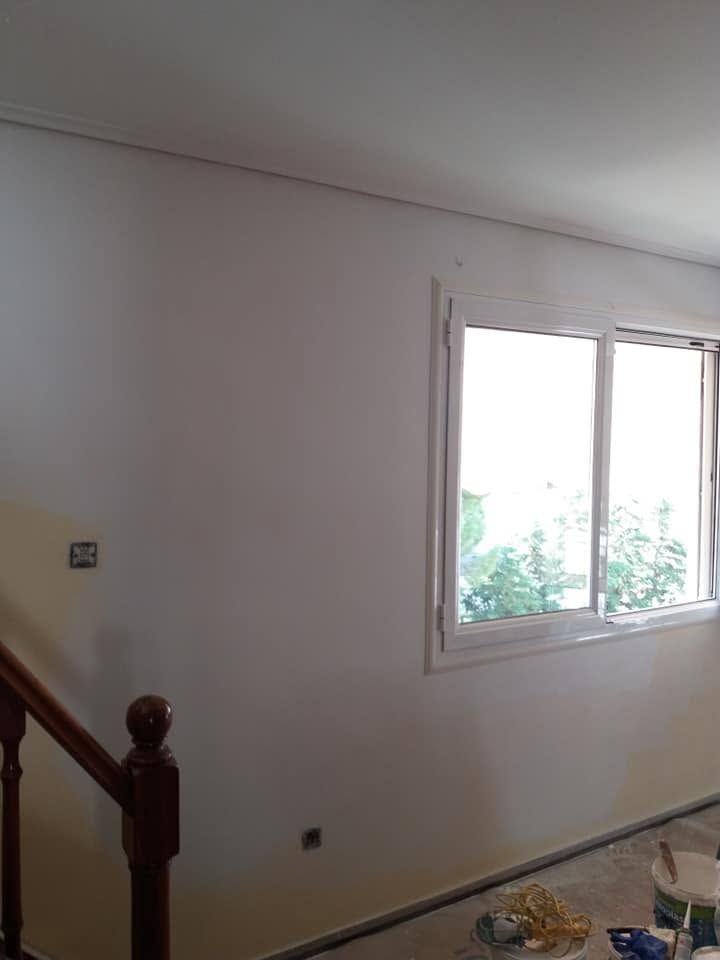
From Mint and Beige to White Walls
Rooms in strong mint and beige, with cracks and dents, were filled and painted white for a brighter home.
See the job step by step