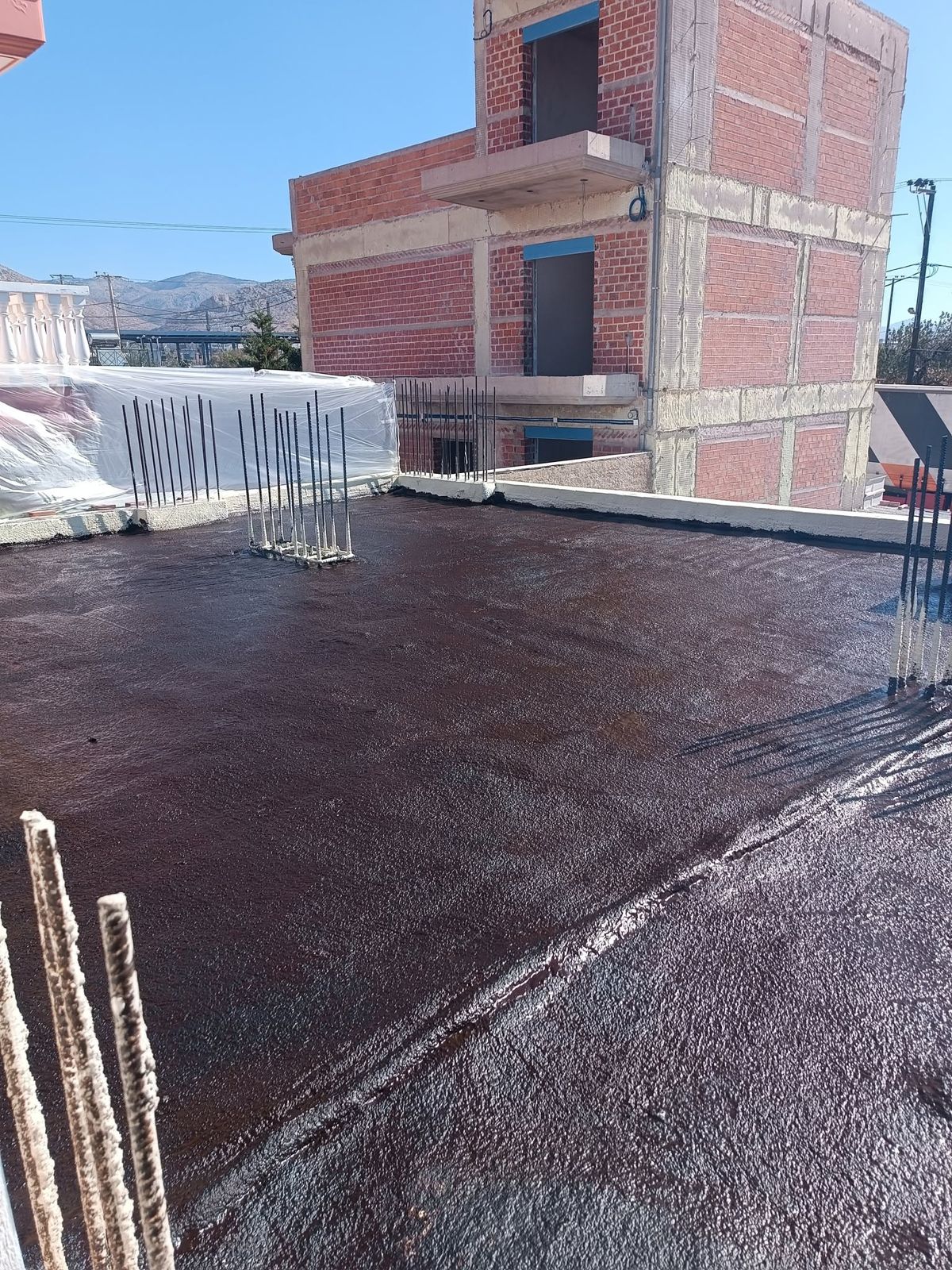
On site, "tar" usually means any black bitumen-based material applied as a liquid: hot bitumen, a water-based bitumen emulsionEmulsion paintThe everyday water-based paint for indoor walls and ceilings. It thins with water, dries quickly, has little smell and comes in matt, satin or glossier finishes. or a bitumen primerPrimerThe thin first coat that goes on before the main material. It binds dust, seals the pores and helps paint or waterproofing stick firmly.. It is spread with a brush or roller and dries to a glossy black layer that water cannot get through.
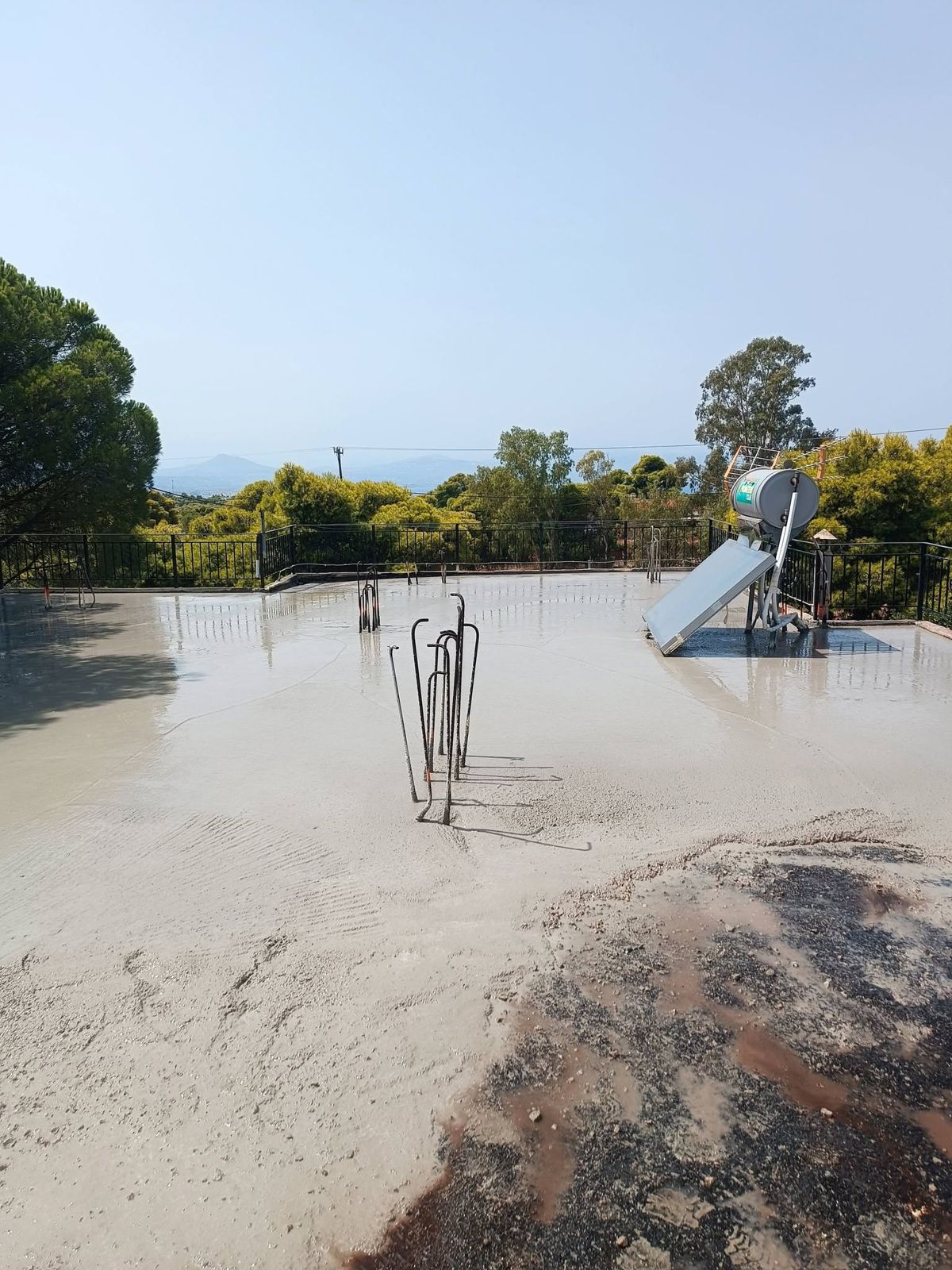
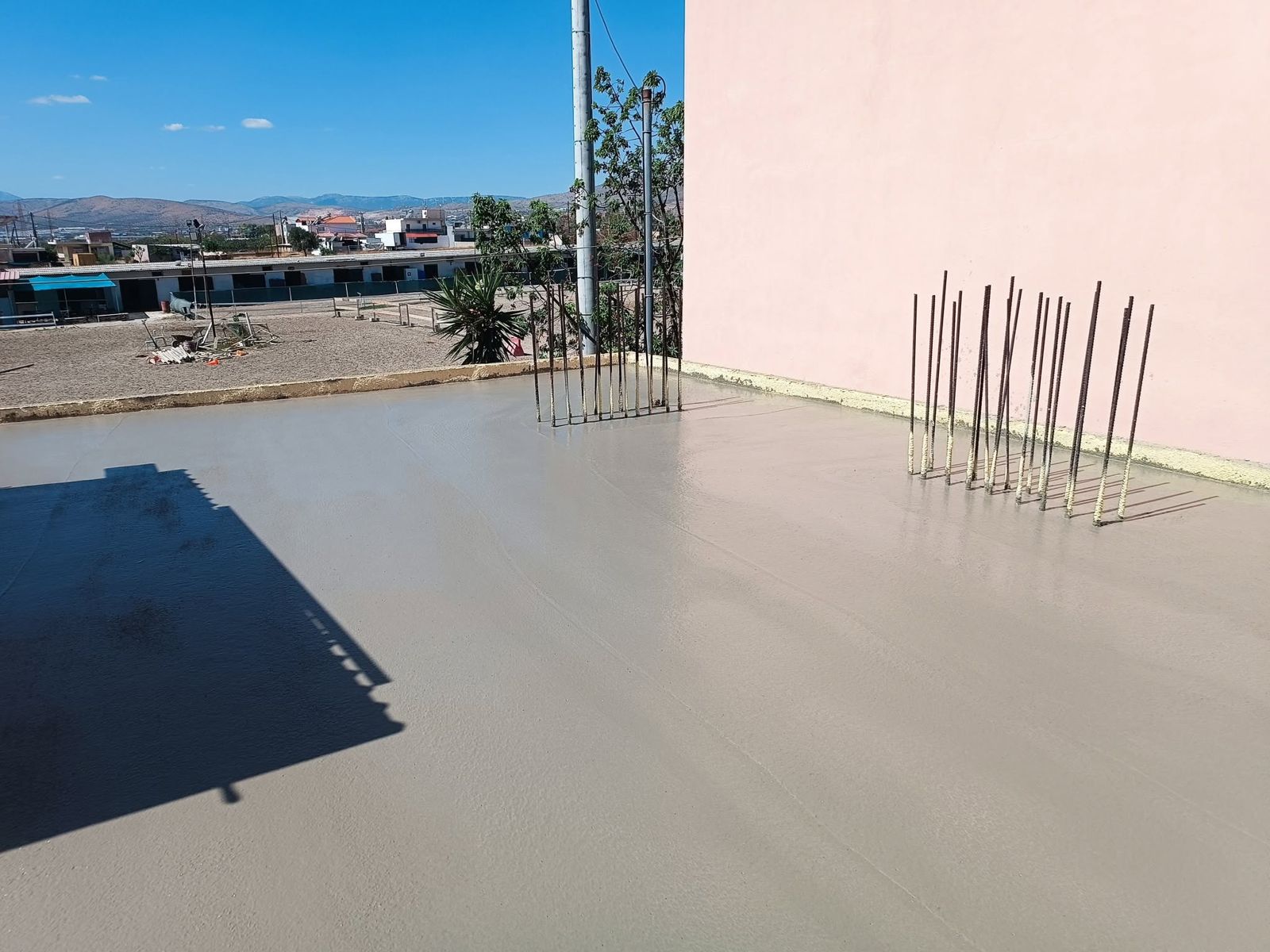
It is used to seal the pores of a concrete slab, as a protective layer over insulationThermal insulationA layer of material that lets heat through only slowly, so a home keeps its warmth in winter and stays cool in summer. before the screedScreedA layer of sand-and-cement mix or lightweight concrete poured over the slab to create falls and a solid surface for the next material. is poured, on foundations and walls that sit against the soil, and as a base under bitumen membranesBitumen membraneWaterproofing that comes in rolls of reinforced bitumen. It is torched onto the roof in sheets that overlap at the seams..
On its own, tar is not complete waterproofingWaterproofingThe work and materials that stop water getting through on flat roofs, balconies, bathrooms, basements, planters and tanks. for an exposed roof: the sun dries it out and cracksCrackA split or gap in render, concrete, a wall, a coating or wood. Fine cracks are usually only on the surface; ones that grow, keep reopening or run diagonally need attention. it, so it is usually covered by another material. Not every waterproofing product will bond to tar either, so before new work it is worth checking what is underneath.