Rising damp
In other languages: Ανερχόμενη υγρασία · الرطوبة الصاعدة
Moisture from the ground that climbs up inside walls through the pores of the materials. It shows as stains, blown render and salts at the foot of walls.
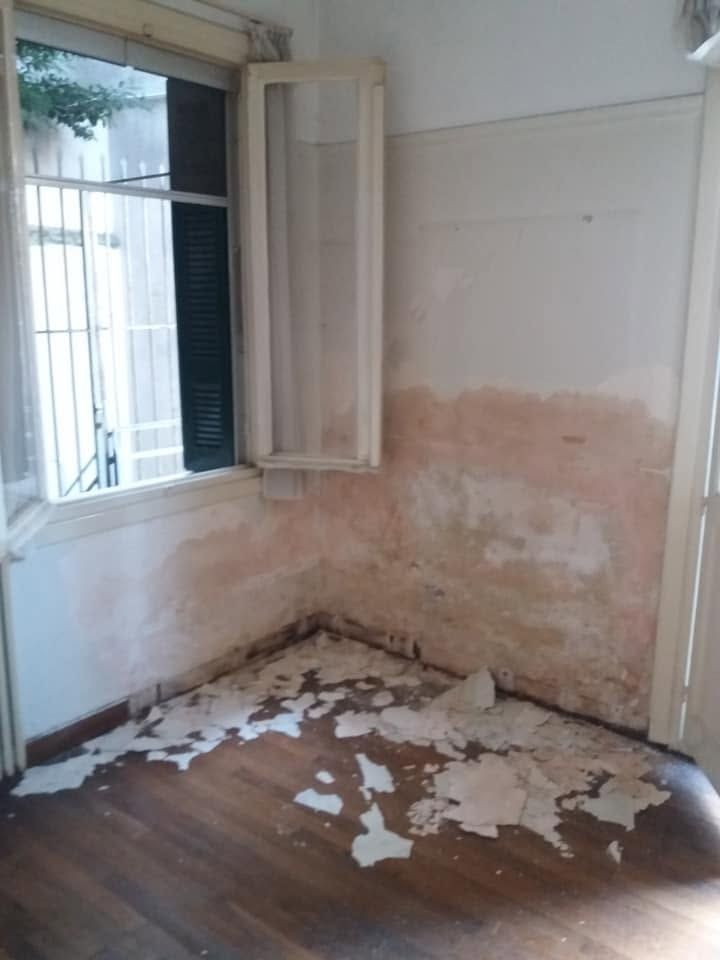
Brick, stone, mortar and render are full of tiny pores. When a wall stands on damp ground with no damp-proof barrier, water climbs up through those pores, like oil up a lamp wick. That is rising damp, and it is common in ground floors, basements and older buildings.
The signs are typical: a damp band along the bottom of the wall with an uneven edge, peeling paint, render that blows and crumbles, white salts on the surface and a musty smell. It should not be confused with a leaking pipe or with condensation, which need different treatment.
Repainting alone won't stop it; the marks come back. The fix starts with the cause: keeping water away from the foot of the wall (gutters, falls, soil levels), creating a barrier in the wall, for example by injecting a special product, and using render and paint that let the wall breathe.
Where you'll see it
- Cracks, Loose Plaster and Rusty Steel: A Guide to Small RepairsDamp Patches: the Cause Comes First
- Damp and Fire-Damaged Rooms: The Work Before the PaintReading the Damage
- Facade Renovation & Painting: The Homeowner's GuidePreparation Is Everything
- Rising Damp: The Complete GuideWhat Rising Damp Actually Is
- Rising Damp: The Complete GuideRecognizing It Early
- Rising Damp: The Complete GuideThe Permanent Fixes
- Rising Damp: The Complete GuidePrevention & Long-Term Care