Bathroom Renovation Step by Step: From Strip-Out to Fixtures
Strip-Out and New Pipework
Part 2 of 5
The strip-out is the noisiest part of the job, but also the one that shows the real state of the bathroom. Right after it comes the new pipework, which you will never see again.
Back to the brick
In a full renovation the tiles, the bathtub, the fixtures and the old render come out until the brick shows. In the bathroom with the green bathtub, all of that went before anything new was put in. The reason is simple: new tiles need sound, straight render underneath, and the new pipes run inside the walls and the floor.
Before the strip-out starts, the water and power are shut off in the room, and furniture and neighbouring rooms are covered. The rubble is bagged and has to be disposed of legally.
What may turn up
Behind old tiles there may be worn pipes, damp inside the wall or render that crumbles. None of this shows until the walls are open, so it is wise to leave some room in your plans for surprises like these.
The strip-out deals with tiles and render, not with the structure of the building. Columns, beams and slabs are not cut into, not even to run a pipe. If a bathroom wall needs to move, the first thing to check is whether it is a load-bearing wall.
New pipework
With the walls open, the plumber runs the new water and drain pipes to where the new fixtures will sit. In the bathroom with the striped tiles, the new water pipes were laid across the floor and up the walls before everything was closed up.
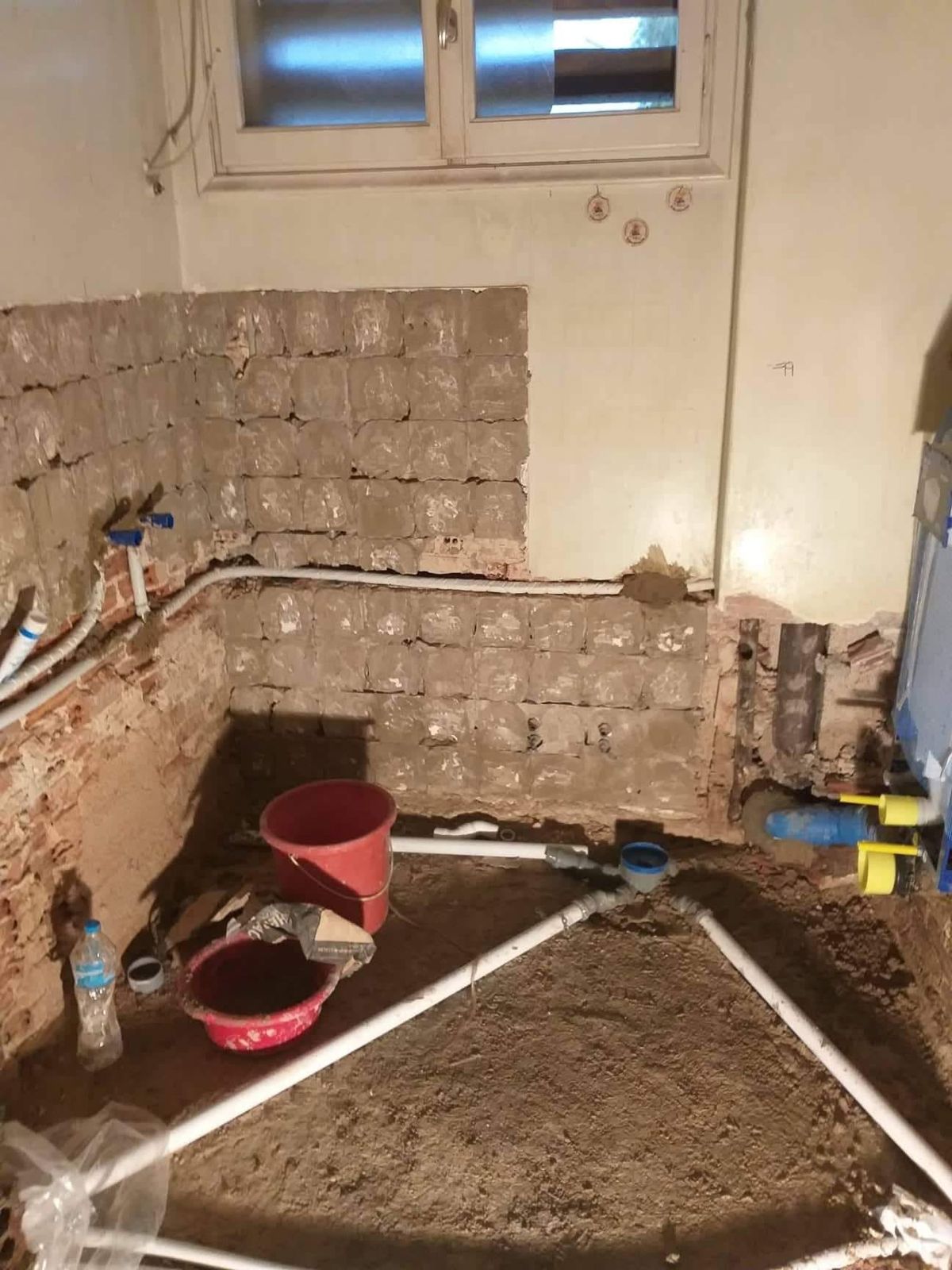
In the walls, the pipes go into wall chases, which are then closed with mortar and render. In the floor, room is made for the drain pipes and the floor drain. In a small bathroom, the new supplies went inside the wall exactly where the tap and basin would be fitted.
If you have chosen a concealed cistern, its frame is fixed at this stage, together with its connections. The same goes for the cables: sockets, lights, an extractor fan and an electric towel rail are wired now by an electrician.
Before the walls are closed
This is the last moment to change the layout. Ask whether the new pipes will be checked for leaks before they are covered, and take photos of where they run, so you know later where not to drill.