Bathroom Renovation Step by Step: From Strip-Out to Fixtures
Before You Start: The Decisions That Matter
Part 1 of 5
A full bathroom renovation follows an order that doesn't change: first the strip-out, then the pipes, the floor and the render, and finally the tiles and the fixtures. Each stage is hidden under the next. That is why most decisions need to be made before the first tile comes off.
Full or partial renovation?
Not every old bathroom has to be stripped out completely. If the tiles are holding, don't sound hollow when you tap them and there are no leaks, repairing the walls above the tiles and changing the fittings may be enough. In one bathroom, damp had lifted the plaster above the tiles: the old fittings came out, the walls were repaired and painted, and the tiles stayed where they were.
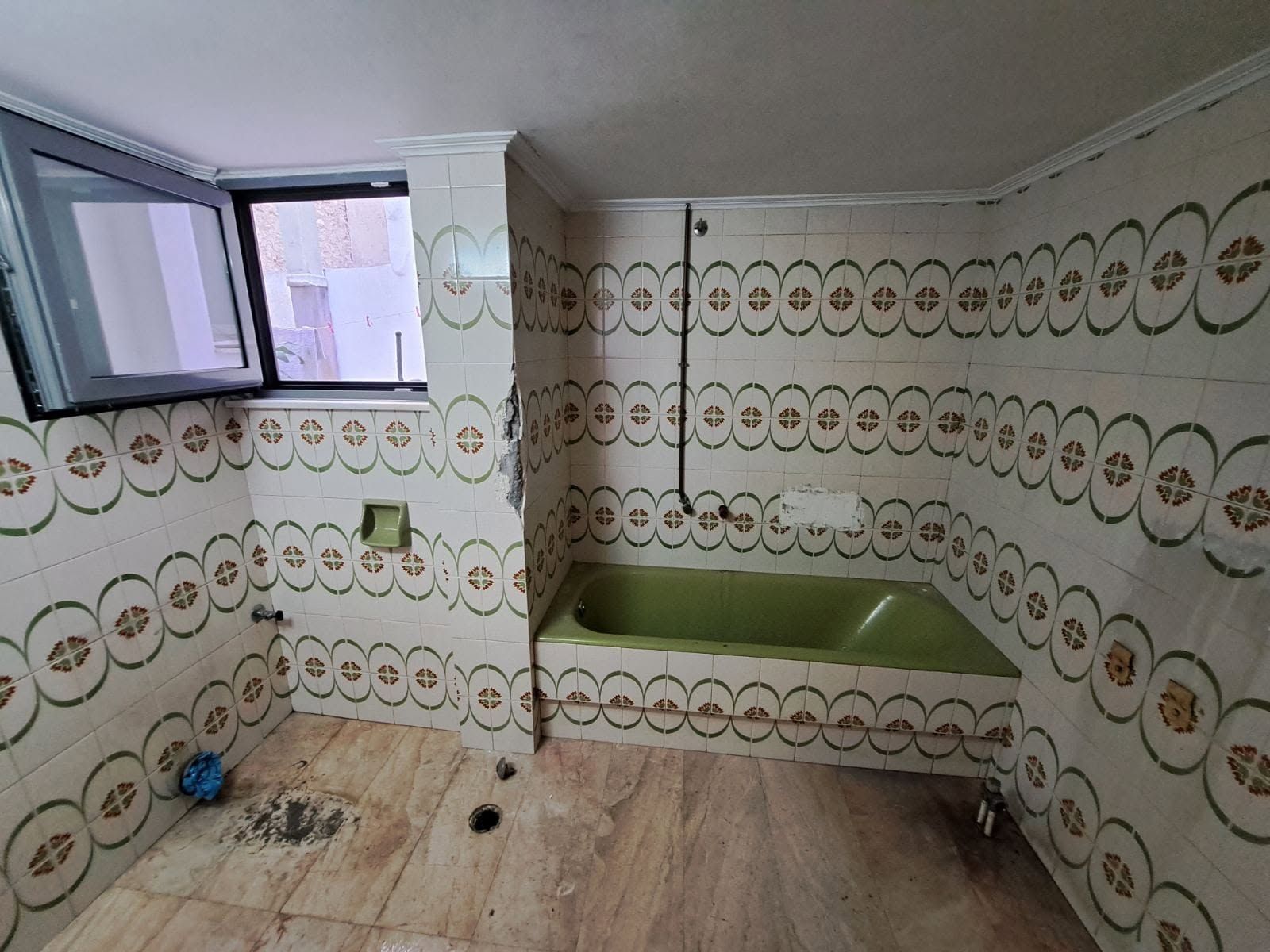
When the tiles are coming loose, the pipes are old or you want a different layout, a full renovation is usually the sensible choice. In the bathroom with the green bathtub, the old tiles, the tub and the pipework had all done their time. Which of the two suits your bathroom is decided on site.
What to decide at the start
- Bathtub or shower. In most of the bathrooms renovated, the bathtub became a shower. A walk-in shower, with no step, needs enough depth in the floor for the drain and the slope. If there isn't enough, a low built-up shower base is an alternative.
- Toilet and cistern. A concealed cistern with a wall-hung toilet goes on a metal frame before the wall is closed. It can't be added later without stripping out again.
- Where each fixture goes. The basin, the toilet, the shower mixer and the towel rail decide where the pipes and cables come out.
- Niches, shelves, lighting. A niche in the shower wall for bottles, or recessed lights in the ceiling, are planned in advance.
- Tiles. Their size and pattern affect how straight the walls need to be. Large tiles and striped tiles show every crooked spot.
Who does what
A bathroom renovation combines several trades: strip-out, plumbing, electrics, rendering, tiling. The plumbing and electrics are work for a plumber and an electrician. Ask at the start who coordinates the different trades and who buys the tiles and fixtures, so they are on hand when their turn comes.
Practical matters before work starts
While the work lasts, the bathroom can't be used, and for some hours the water will be off. If it is the only bathroom in the home, think ahead about how you will manage. In a block of flats, it helps to let the neighbours know about the noise and to know the building's rules on working hours and rubble.