Hollow (debonded) tiles
In other languages: Κούφια πλακάκια (ξεκόλλημα) · البلاط الأجوف (المنفصل عن قاعدته)
Tiles or slabs that have come away from their base. They sound hollow when tapped lightly, and often rock or crack.
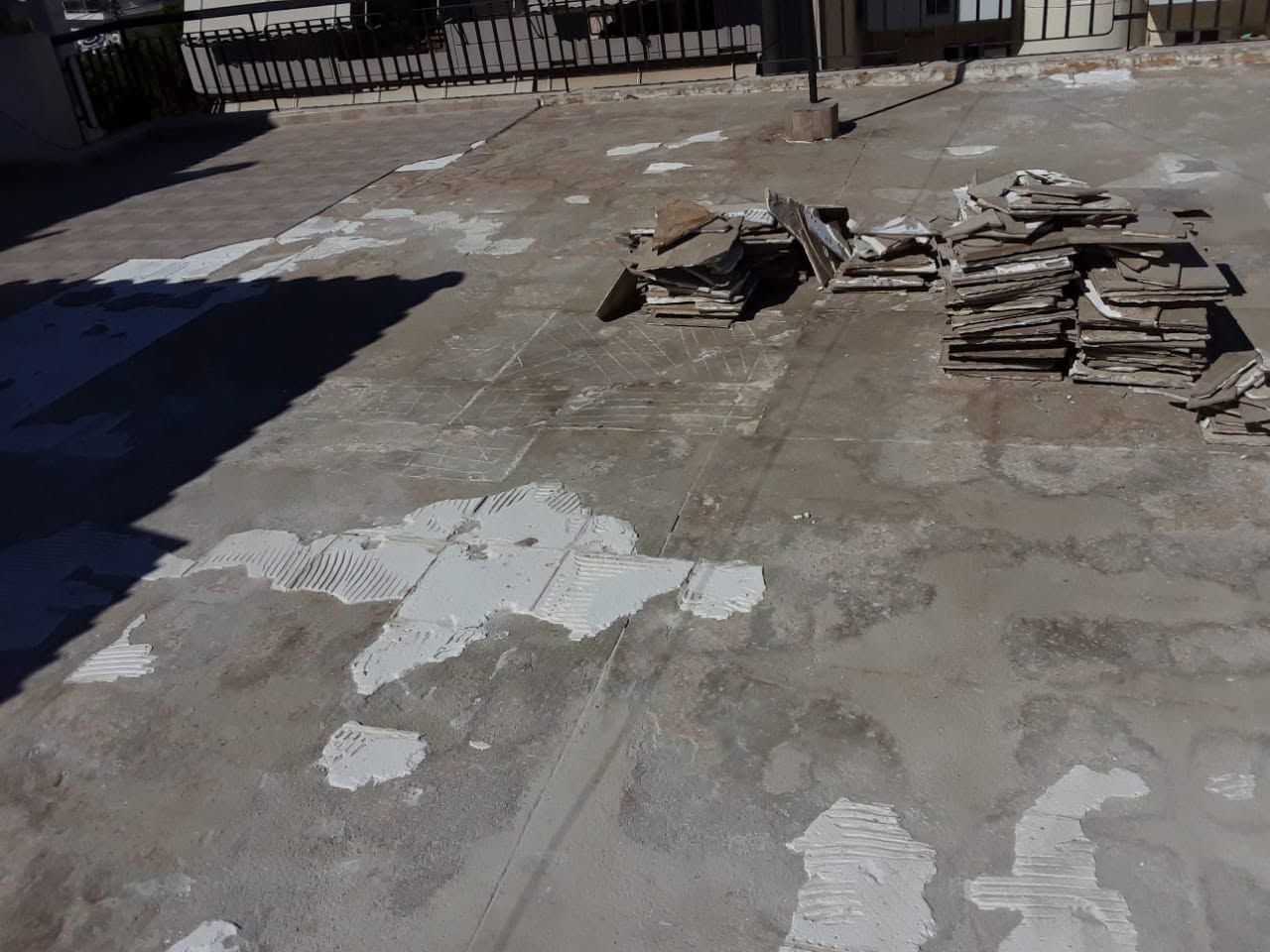
A tile is held in place by the tile adhesive or mortar underneath it. When that bond fails, the tile is left sitting on air. Tapped lightly, for example with the handle of a screwdriver, it gives a hollow sound instead of the solid sound of a tile that is well bedded.
It happens often on balconies and flat roofs, because water gets in through open joints and cracks, and sun and cold keep the floor moving. It also happens when the adhesive was spread in a few dabs rather than over the whole back of the tile.
A hollow tile can stay like that for a while, but at some point it cracks or lifts. A few hollow tiles are usually replaced one by one. When there are many, what is going on underneath needs checking, because water is often getting into the floor. No coating should go over hollow tiles before they are fixed, because it would have nothing firm to hold on to.
Where you'll see it
- Quick answersWhat does it mean to strip a bathroom or kitchen "back to the brick"?
- Quick answersCan a balcony be waterproofed without breaking up the tiles?
- Quick answersDoes an old bathroom always need a full renovation?
- Courtyards, Sidewalks and Balconies: A Guide to Outdoor FloorsBalconies, Verandas and Falls
- Demolition and Strip-Out: What to Know Before the First BlowStripping Tiles and Render
- Bathroom Renovation Step by Step: From Strip-Out to FixturesBefore You Start: The Decisions That Matter
- Bathroom Renovation Step by Step: From Strip-Out to FixturesWhat to Ask and What to Check