Tile adhesive
In other languages: Κόλλα πλακιδίων · لاصق البلاط
A ready-mixed cement-based mortar, sold as a powder and mixed with water, used to stick tiles to walls and floors. It is spread with a notched trowel.
Tiles used to be bedded on a thick layer of sand and cement mortar. Today tile adhesive is used almost every time: a ready-made mortar with additives that give it a strong grip. It is spread in a thin layer and combed with a notched trowel so the tile beds down and bonds over its whole back.
Not all adhesives are the same. Large or porcelain tiles, outdoor areas, roof terraces and balconies that bake in the sun, and floors with underfloor heating need more flexible, stronger adhesives. The base has to be sound, clean and flat, and on fresh render the surface is often scored so the adhesive grips better.
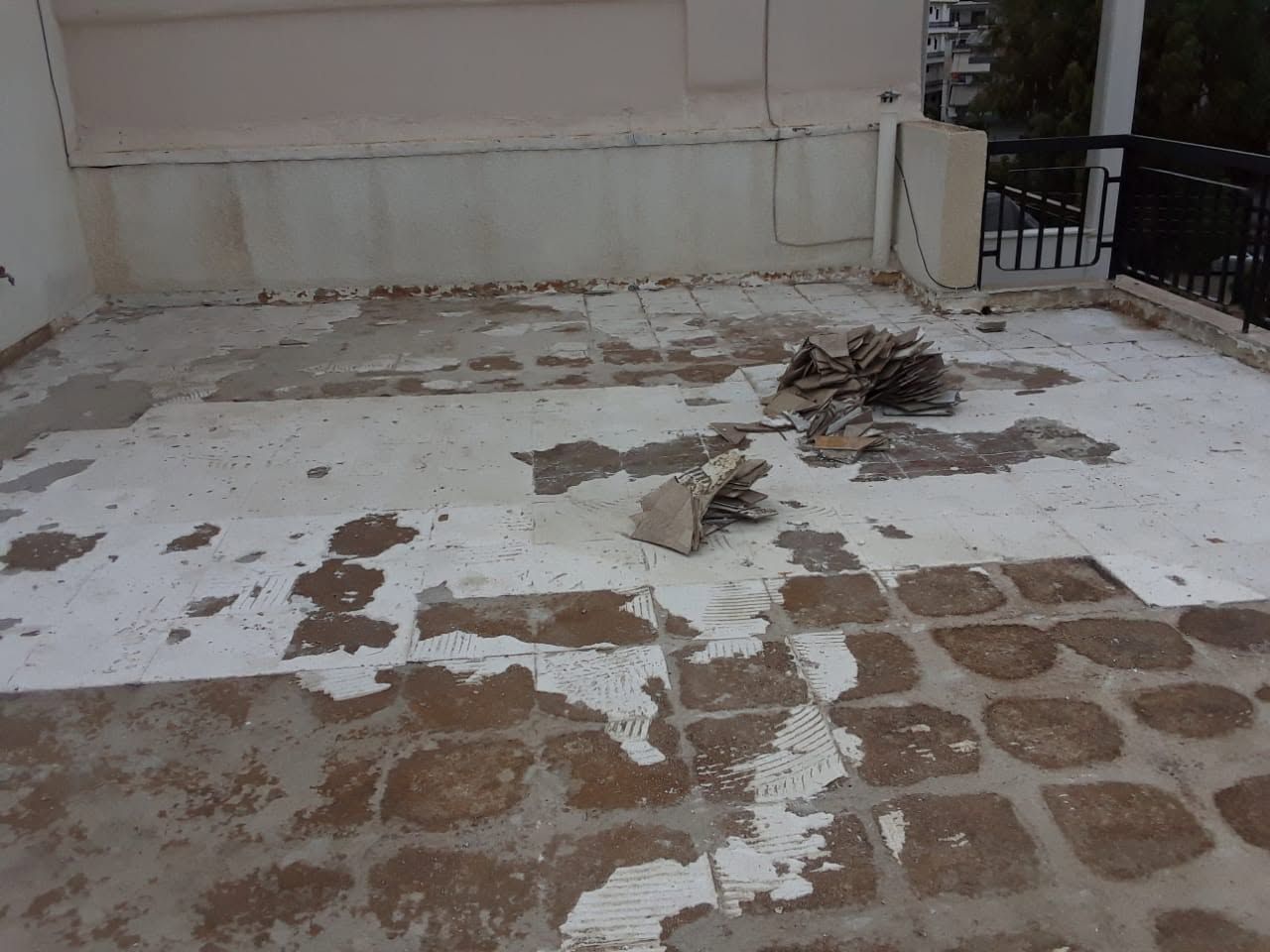
If a tile sounds hollow when you tap it, the adhesive usually did not cover its whole back. Tiles like that crack more easily and, on terraces and balconies, let water collect underneath. When old tiles are stripped out, the leftover adhesive is removed before any new layer goes on.
Where you'll see it
- Quick answersWhat happens to the rubble from a strip-out? Where does it go?
- Quick answersWhat does a full bathroom renovation involve?
- Quick answersCan new tiles go on top of the old ones?
- Cracks, Loose Plaster and Rusty Steel: A Guide to Small RepairsAfter the Plumber or Electrician
- Courtyards, Sidewalks and Balconies: A Guide to Outdoor FloorsBalconies, Verandas and Falls
- Demolition and Strip-Out: What to Know Before the First BlowRubble, and What to Ask
- Bathroom Renovation Step by Step: From Strip-Out to FixturesFloor, Waterproofing and Render
- Bathroom Renovation Step by Step: From Strip-Out to FixturesTiles and Fixtures
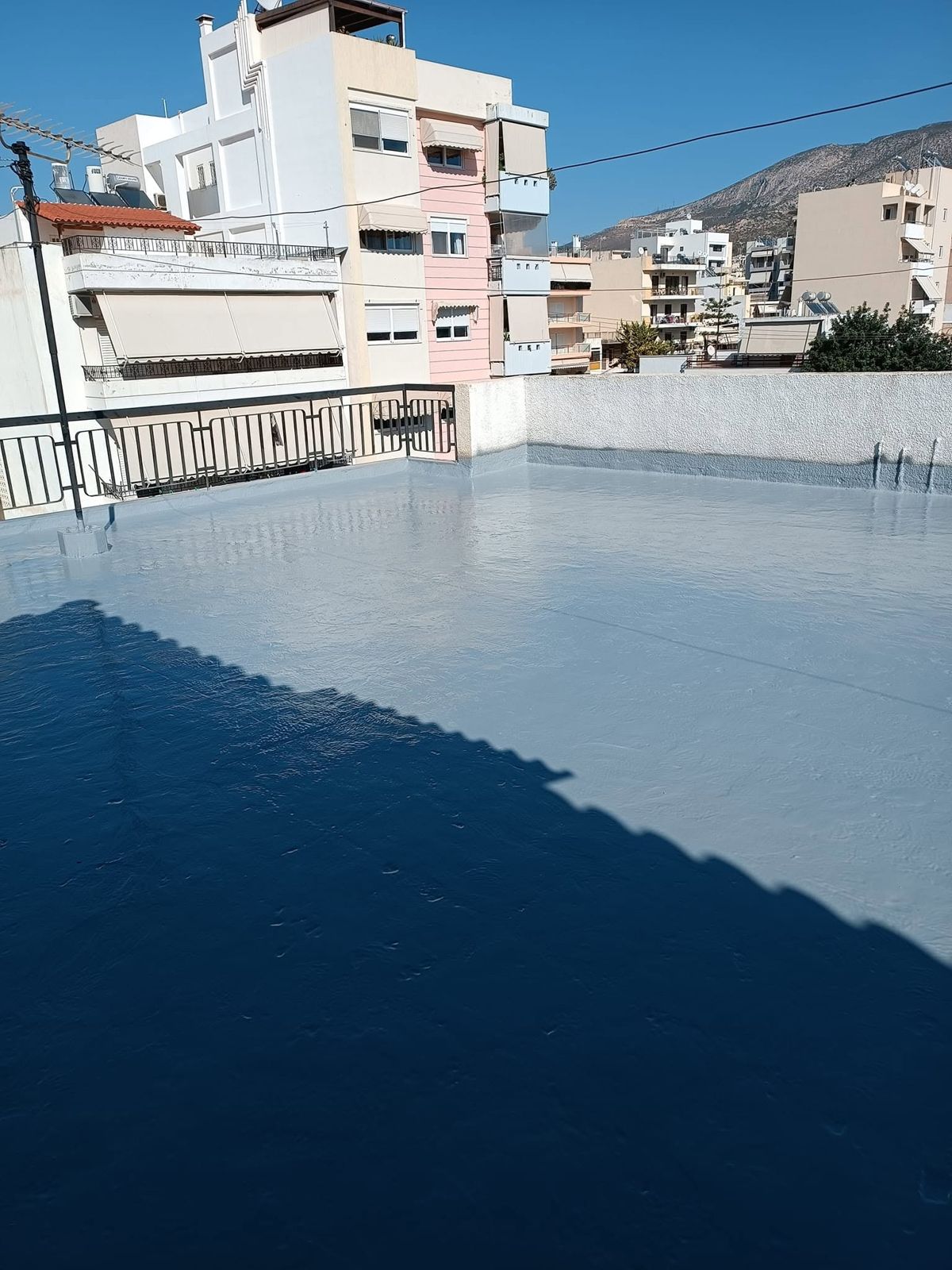 Worn Tiled Terrace Waterproofed by Spraying
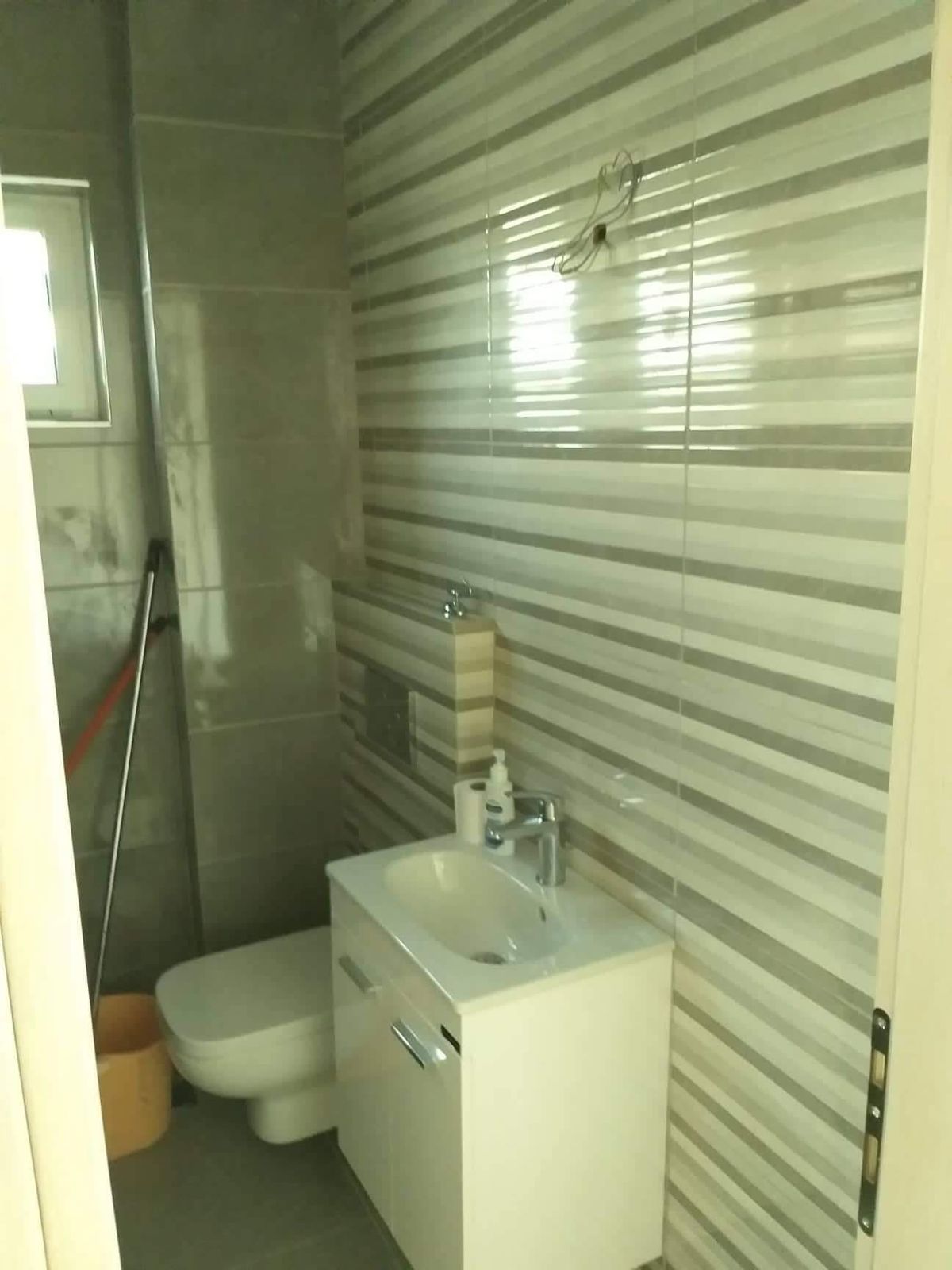 Bathroom Renovation with Striped Tiles