Courtyards, Sidewalks and Balconies: A Guide to Outdoor Floors
Balconies, Verandas and Falls
Part 4 of 4
On a balcony or veranda the floor has two jobs. It has to be pleasant and safe to walk on, and it has to send rainwater away from the house. When the second job isn't done properly, the problem usually shows first on the ceiling of the floor below or at the balcony door sill.
Falls
A balcony floor should slope gently towards the drain or the gutter, and always away from the door. The slope doesn't come from the tiles but from the layer under them, usually screed or cement mortar, laid when the floor is built.
That's why, when water pools or runs towards the door, a new coating on top doesn't fix it on its own: it follows the same surface. Small hollows can be filled locally before the new layer goes on. But if the whole floor leans the wrong way, the slope only changes if the layer underneath is redone.
Signs that the falls aren't working: water left standing after rain, dark or green marks in the corners, dirt that always collects in the same spot, and damp at the door sill.
The tiles
On balconies the grout darkens and opens up, and some tiles come away from their base. A simple test is to tap them lightly with the handle of a screwdriver: the ones that sound hollow have usually come loose. Depending on what turns up, there are three main routes:
- A few damaged tiles or joints. Only the tiles that have come loose or cracked are replaced, and the joints are renewed. The hard part is finding matching tiles.
- Sound tiles, but water getting through. If the tiles are firmly stuck, a waterproof coating can go over them without breaking anything. That is waterproofing work, and it changes how the floor looks.
- Many broken or hollow tiles, or wrong falls. Then the floor usually has to be stripped, given new falls and waterproofing underneath, and laid again from scratch.
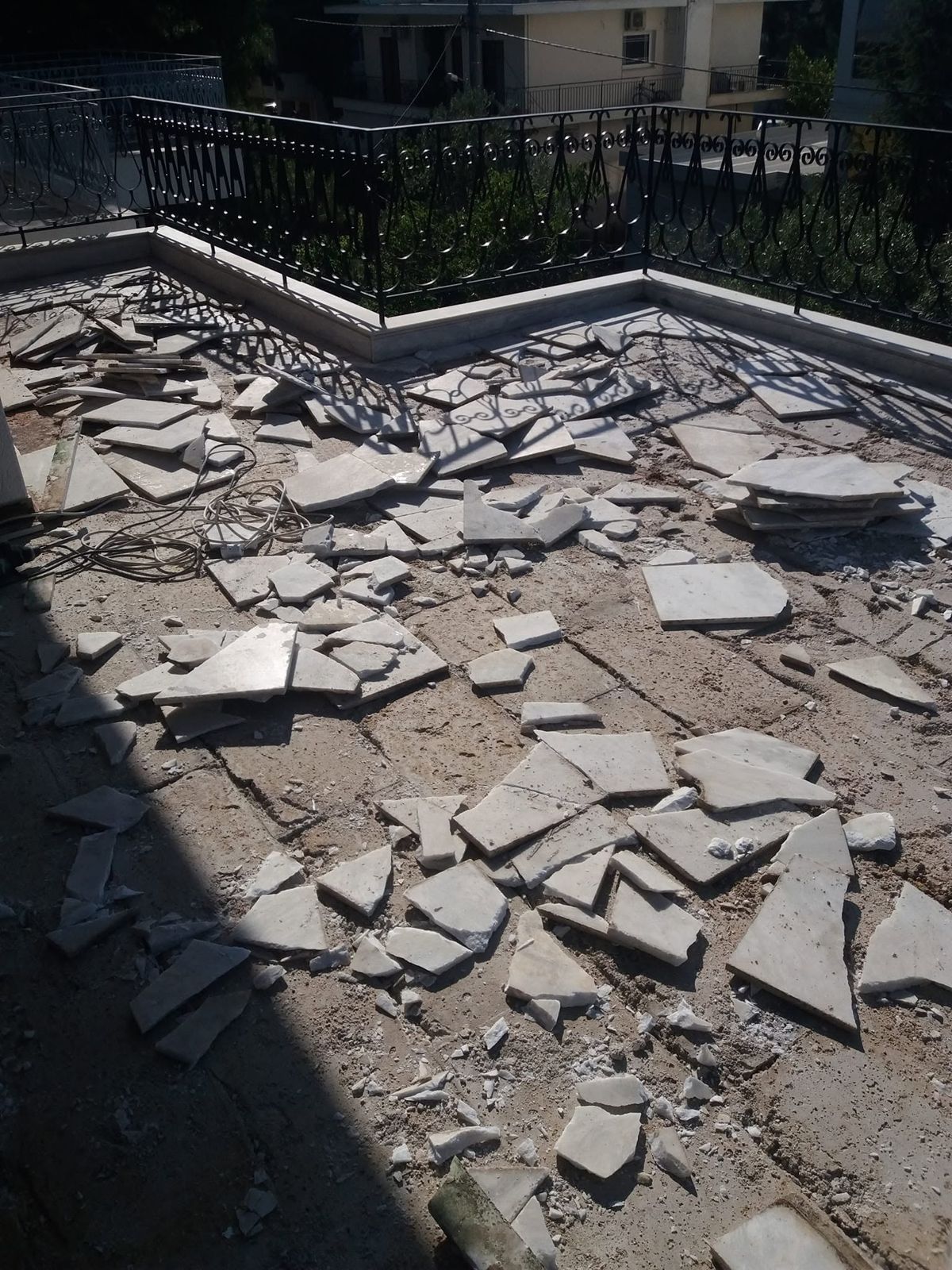
On one terrace the irregular marble slabs had cracked and come loose. They all came up to show what was underneath: a joint with rotted wood inside it and a crack running along the floor, the kind of spots where water finds its way in. Once these were cleaned out and sealed, the terrace got a new, continuous grey layer, with no broken pieces and no open joints.
If new tiles are laid
- They need to be tiles for outdoor use, which stand up to the cold and don't get slippery when wet, in other words slip-resistant tiles.
- The tile adhesive and the grout need to be suitable for outdoor use.
- The waterproofing goes down before the tiles and runs a little way up the wall, because the corner between floor and wall opens up easily.
- The drain and the door sill need particular care: water should end up in the drain, not at the door.
What to ask
- Which way will the water run, and how will the slope be checked before the tiles go down?
- Will there be waterproofing under the new floor?
- What will be done at the corner with the wall and at the door sill?
- Where will the rubble from stripping the floor go?
Every balcony is different, and the right fix depends on what is under the tiles. That's why the first conversation always happens on site, with the floor in front of you.