Bathroom Renovation Step by Step: From Strip-Out to Fixtures
Tiles and Fixtures
Part 4 of 5
The tiles and fixtures are what you see at the end. How good they look, though, depends on what came before: straight walls, the right slope and supply points in the right place.
Tiles
Tiles are stuck with tile adhesive, spread with a notched trowel. In the small bathroom, levelling clips held the large tiles flush with each other, with no lips at the joints.
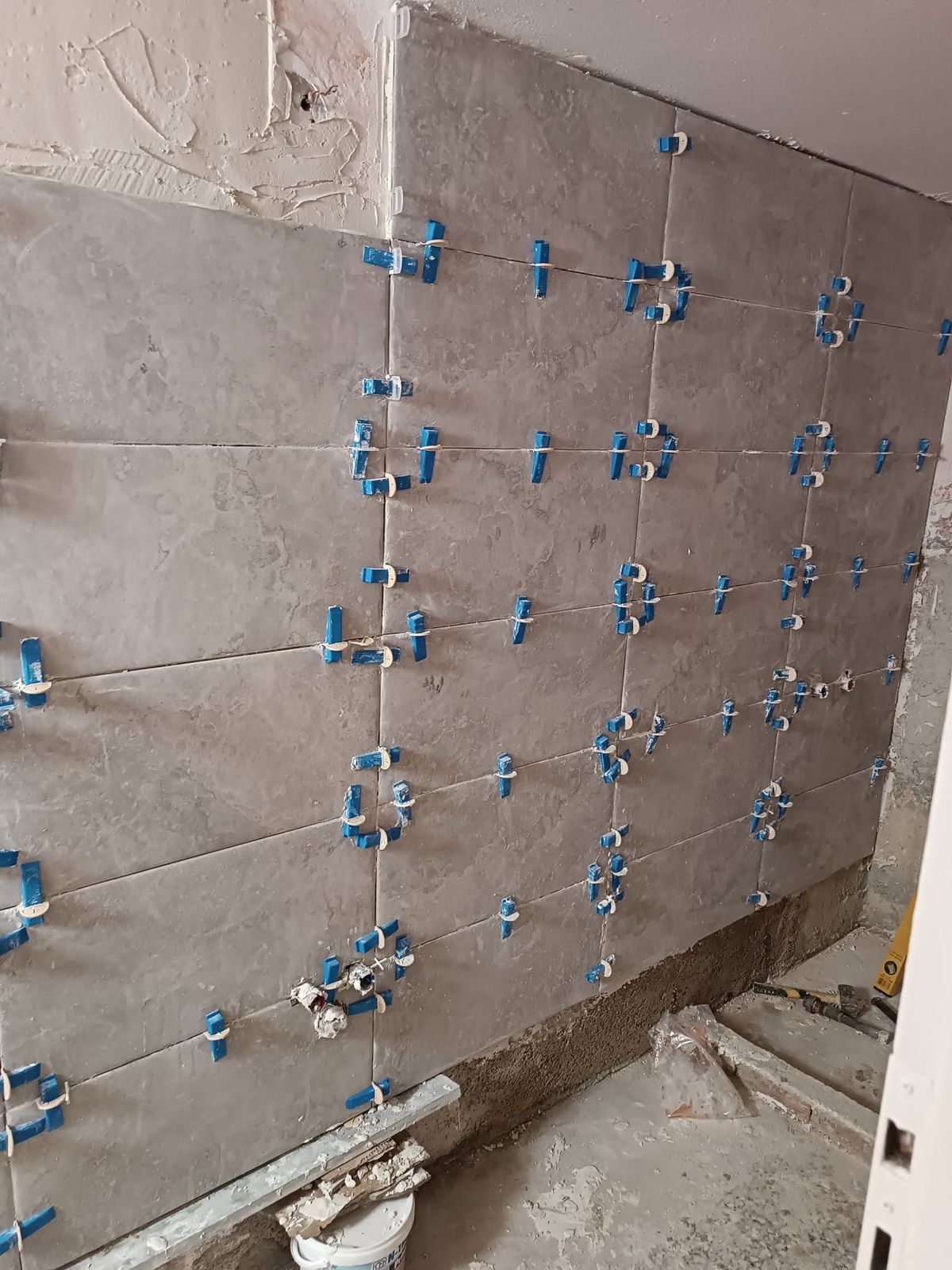
With striped or patterned tiles, laying them takes care so the lines carry on straight from wall to wall, as in the bathroom with the striped tiles. On the floor, the tiles follow the slope to the floor drain. In the narrow WC, the large grey tiles were laid around the drain with spacers that keep the joints straight.
Once the adhesive has set, the joints are filled with grout. In the corners where wall meets floor, and around the shower and the basin, silicone sealant is usually used, because it stays flexible and follows the small movements of the materials.
Niches and details
A niche in the shower wall holds bottles without shelves or baskets. In the bathroom with the grey tiles, the niche was lined with the same tile as the walls. In another bathroom, a built-in shelf was formed around the frame of the wall-hung toilet. Details like these need planning before the render goes on, or the wall has to be opened again.
Fixtures go in last
The fixtures go in last: the toilet, the basin and its vanity unit, the taps, the shower glass, the mirror and the towel rail. In the bathroom with the walk-in shower, a fixed glass panel keeps the water inside, with no doors and no step, and the wall-hung toilet leaves the floor clear for easy cleaning. Of the concealed cistern, only the flush plate shows.
The supply points have to come out exactly where the fixtures you chose need them. So it's best to have decided on the models before the walls are closed, not when the time comes to fit them.
Before the first shower
At the end the room is cleaned of leftover adhesive and grout. Grout and silicone need time to set before they get wet, so ask when you can start using the shower.